

You Have More Options Than You Think After a Vasectomy
Alternatives to a vasectomy reversal give men a real path to fatherhood — without going back under the knife for a complex, multi-hour surgery.
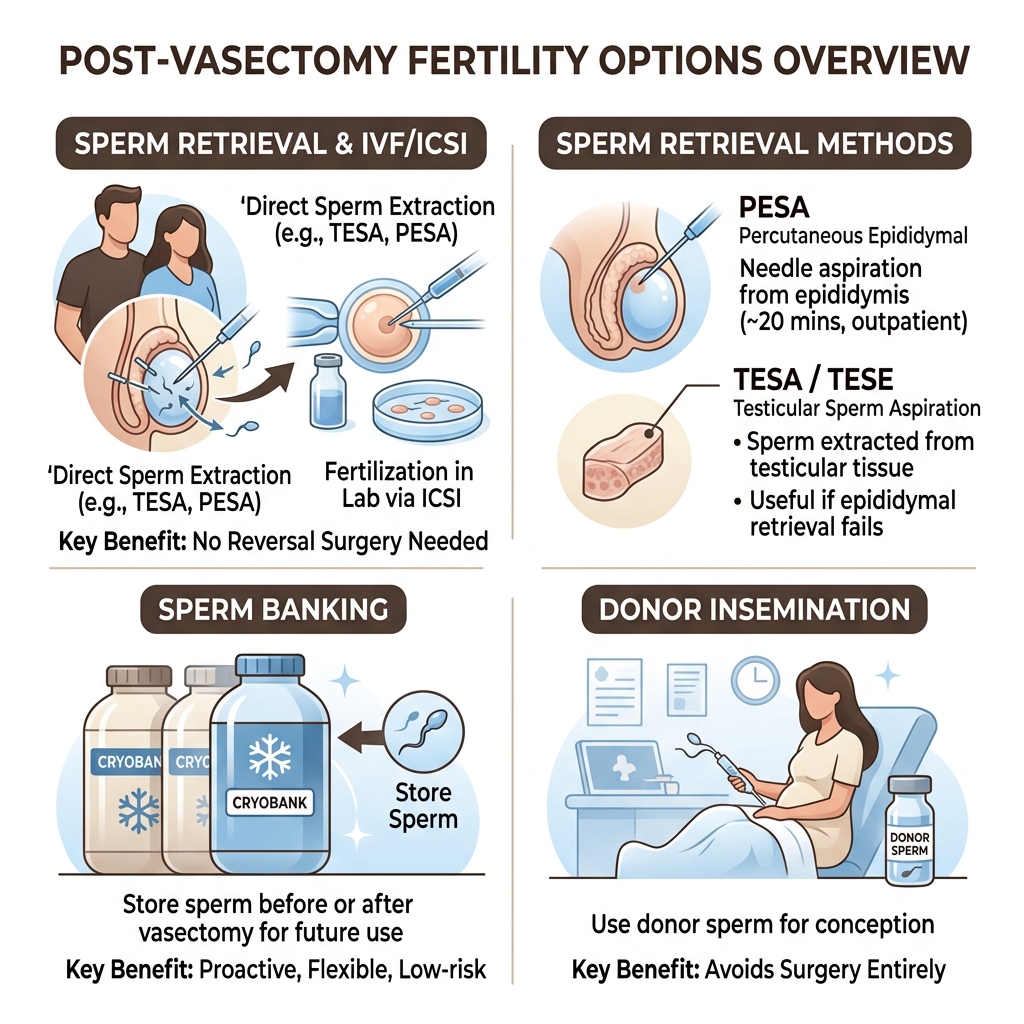
Here’s a quick look at your main options:
| Option | How It Works | Key Benefit |
|---|---|---|
| Sperm Retrieval + IVF | Sperm extracted directly from epididymis or testes, used to fertilize eggs in a lab | No reversal surgery needed |
| PESA | Needle aspiration from epididymis, ~20 minutes, outpatient | Minimally invasive, fast recovery |
| TESA / TESE | Sperm extracted from testicular tissue | Works even when epididymis retrieval fails |
| Sperm Banking | Store sperm before or after vasectomy for future use | Proactive, flexible, low-risk |
| Donor Insemination | Use donor sperm for conception | Avoids surgery entirely |
Life changes. Relationships change. And up to 1 in 10 men who have had a vasectomy eventually decide they want to father a child again. For many of them, vasectomy reversal feels like the obvious first step — but it’s not the only one, and for some men it’s not even the best one.
A reversal is a technically demanding procedure that can take up to four hours. And while success rates are meaningful, pregnancy is not guaranteed — antisperm antibodies that form after vasectomy can impair fertilization even when sperm returns to the ejaculate. That’s why more men and their partners are exploring other paths.
This guide walks you through those options clearly, so you can make the best decision for your family.
I’m Dr. Mustafa Ahmed MD, FACS, FAACS, a board-certified surgeon with deep experience in minimally invasive procedures — and the nuances around alternatives to a vasectomy reversal are something I help patients navigate regularly. In the sections ahead, I’ll break down each option so you can walk into any specialist consultation fully informed.
Understanding Alternatives to a Vasectomy Reversal
When we talk about restoring fertility after a vasectomy, most people immediately think of a reversal. In a reversal, a surgeon attempts to reconnect the vas deferens, the tubes that were cut during your original procedure. It’s a “plumbing repair” job. However, alternatives to a vasectomy reversal focus on a different philosophy: instead of fixing the plumbing, we simply go straight to the source to collect the “product.”
Sperm production doesn’t stop after a vasectomy. Your testicles continue to manufacture sperm every single day; they just don’t have an exit ramp anymore. The sperm eventually break down and are reabsorbed by the body. This means that even decades after your procedure, viable sperm are usually still present and waiting.
The primary alternatives fall into two categories: assisted reproduction (using your own biological sperm) and donor options. For men who want a biological connection to their child but want to avoid major scrotal surgery, sperm retrieval combined with In Vitro Fertilization (IVF) is the gold standard.
According to What Are The Alternatives to Vasectomy Reversal?, these methods are often preferred when “expediency is demanded” or when the time since the original vasectomy has been long enough to make a surgical reversal less likely to result in a natural pregnancy.
Another option is therapeutic donor insemination. While this means the child will not be biologically related to the father, it is often the least invasive and most straightforward path to parenthood for couples who are comfortable with that choice.
Sperm Retrieval and IVF: A Powerful Alternative to a Vasectomy Reversal
If you decide that a surgical reversal isn’t for you, the most common path involves a two-step process: retrieving the sperm and using it in a laboratory setting to create an embryo. This is a highly effective combination that bypasses the need for the vas deferens entirely.
The beauty of this approach is that it allows you to maintain your “permanent” birth control status. If you and your partner only want one more child, you don’t have to worry about getting a second vasectomy later. You keep your sterility for day-to-day life while using modern technology to achieve a pregnancy on your own terms.
As noted in Vasectomy Reversal vs. Alternative Options, sperm retrieval rates are incredibly high—approximately 95%—especially for men who have fathered children in the past. This makes it a very predictable option compared to the variable success rates of surgical reconnection.
How Sperm Retrieval Works as an Alternative to a Vasectomy Reversal
Sperm retrieval is generally performed as a minimally invasive, outpatient procedure. We use local anesthesia or light sedation to ensure you are comfortable. There are several specific techniques we use, depending on where the most viable sperm are likely to be found:
- PESA (Percutaneous Epididymal Sperm Aspiration): This is often the first choice because it is the least invasive. A very fine needle is inserted through the skin of the scrotum into the epididymis (the coiled tube where sperm mature). We gently aspirate fluid, which usually contains thousands to millions of sperm. The whole process takes about 20 minutes.
- TESA (Testicular Sperm Aspiration): Similar to PESA, but the needle is inserted directly into the testicle to retrieve sperm. This is used if PESA doesn’t yield enough high-quality sperm.
- MESA (Microscopic Epididymal Sperm Aspiration): This is a more involved surgical version of PESA using a microscope. While it’s more invasive, it often yields a higher volume of sperm that can be frozen for future use.
- TESE (Testicular Sperm Extraction): This involves a small incision to remove a tiny piece of testicular tissue, which is then processed in the lab to find sperm.
The recovery time for these procedures is remarkably short. Most men are back to normal activities within 24 to 48 hours, often requiring nothing more than an ice pack and some over-the-counter pain relief.
The Role of IVF and ICSI in Alternatives to a Vasectomy Reversal
Once we have the sperm, we can’t just use it for simple artificial insemination. Sperm retrieved directly from the epididymis or testes haven’t completed their full “maturation journey” through the vas deferens, so they often have very low motility (they aren’t great swimmers).
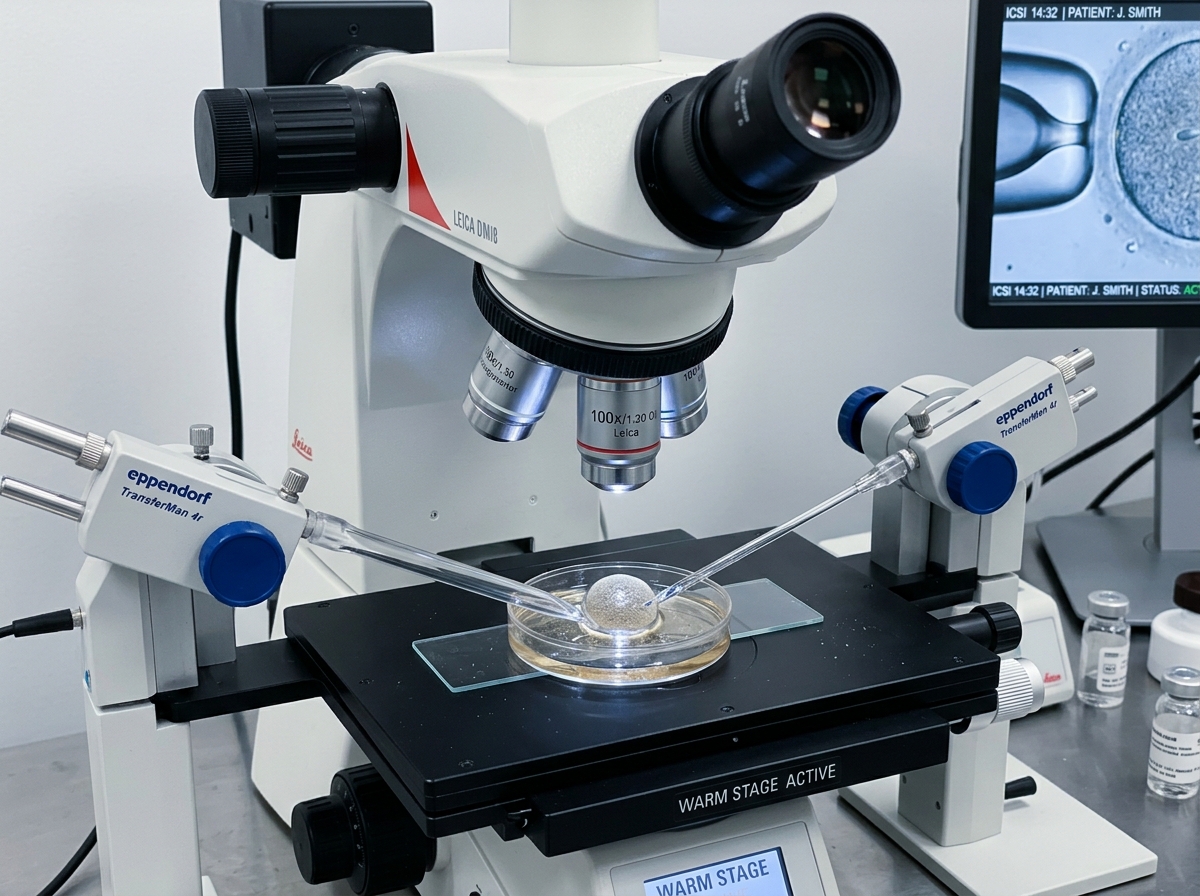
To overcome this, we use a technique called ICSI (Intracytoplasmic Sperm Injection). In a standard IVF cycle, the female partner’s eggs are retrieved. Instead of just putting the sperm and eggs in a dish and hoping they find each other, a scientist (an embryologist) selects a single, healthy-looking sperm and injects it directly into the egg.
This laboratory precision is why the pregnancy rates for this alternative are so stable. Even if the retrieved sperm are few in number or slow-moving, ICSI gives them the best possible chance to fertilize the egg. This method is particularly effective for overcoming the “antisperm antibodies” that often plague men after a vasectomy reversal.
Comparing Success Rates and Recovery
When deciding between a reversal and alternatives to a vasectomy reversal, it’s helpful to look at the hard data. It’s important to distinguish between “patency” (the return of sperm to the ejaculate) and “pregnancy” (actually having a baby).
| Feature | Vasectomy Reversal | Sperm Retrieval + IVF/ICSI |
|---|---|---|
| Procedure Time | 2 to 4 hours | 20 to 30 minutes |
| Anesthesia | General or heavy sedation | Local or light sedation |
| Recovery | 1 to 2 weeks; no sex for 4 weeks | 1 to 2 days; minimal restrictions |
| Sperm Return Rate | 60% to 95% (depends on years) | ~95% retrieval success |
| Pregnancy Rate | ~55% average | ~50% (highly dependent on female age) |
| Future Contraception | Lost (requires new vasectomy) | Retained |
As highlighted in Non-Surgical Alternatives for Men Desiring Children Following a Vasectomy, the “time since vasectomy” is a major factor. If it has been more than 7 to 10 years since your original procedure, the success rates for a reversal begin to drop significantly. In these cases, many specialists recommend going straight to sperm retrieval and IVF because the “ongoing pregnancy rate” of 20-30% per cycle often exceeds the likelihood of natural conception after a late-stage reversal.
Another hidden hurdle in reversals is the development of antisperm antibodies. Because the body has been “leaking” sperm proteins into the bloodstream for years, your immune system may have learned to attack sperm. Even if a reversal successfully reconnects the tubes, these antibodies can coat the sperm and prevent them from penetrating an egg. IVF with ICSI completely bypasses this immunological roadblock.
Proactive Options and Future Technologies
For men who are currently planning a vasectomy but want to keep their options open, or for those looking at the horizon of male birth control, there are proactive steps and emerging technologies to consider.
Sperm Banking: The Ultimate Insurance Policy
Sperm banking (cryopreservation) is perhaps the most effective proactive alternative to a future reversal. By storing several samples before your vasectomy, you ensure that high-quality, motile, “pre-vasectomy” sperm are available whenever you need them. This eliminates the need for any future surgery—no reversal, no retrieval. You simply use the stored samples for IUI or IVF. With modern at-home kits, this process has become incredibly accessible and discreet.
Experimental Alternatives: RISUG and Vasalgel
There is significant interest in “reversible” long-term contraceptives like RISUG (Reversible Inhibition of Sperm Under Guidance) and its Western counterpart, Vasalgel. These involve injecting a polymer gel into the vas deferens to block sperm. The idea is that the gel could eventually be flushed out with another injection, restoring fertility instantly.
However, a healthy dose of skepticism is warranted. Research on these methods, such as studies on rhesus monkeys, has shown that the “insertion” part is actually quite similar to a vasectomy in terms of surgical complexity. Furthermore, the “flushing” or reversal mechanism has not been widely proven in human trials. For now, these remain experimental and are not available for clinical use in Henderson or the wider US.
Frequently Asked Questions about Post-Vasectomy Fertility
When is sperm retrieval and IVF preferable over a reversal?
This is a common question we hear. Generally, we recommend looking at sperm retrieval and IVF if:
- The female partner is over 35: Because fertility declines with age, the “wait and see” period after a reversal (which can take 6-12 months for sperm to return) may be too long. IVF offers a much faster timeline.
- It’s been 10+ years since the vasectomy: Reversal success rates are lower after a decade.
- There are other fertility factors: If the female partner has blocked tubes or other issues, you would likely need IVF anyway.
- You want to remain sterile: If you only want one more child and don’t want to risk unplanned pregnancies later.
What is the recovery time for sperm retrieval procedures?
Recovery is very manageable. Because procedures like PESA and TESA are “needle-based” rather than “incision-based,” there are no stitches to worry about. We recommend 24 hours of rest and using an ice pack intermittently. You might feel a dull ache, similar to the original vasectomy, for a day or two. Most men can return to work the following day and resume exercise within a week.
Can sperm still be retrieved decades after a vasectomy?
Yes! One of the most reassuring facts about male biology is that the “factory” keeps running. As long as the testicles are healthy and producing normal hormone levels, we can almost always find viable sperm, whether it has been 5 years or 25 years since your vasectomy. The “age” of the vasectomy affects the success of a reversal, but it has very little impact on the success of sperm retrieval.
Conclusion
Deciding how to grow your family after a vasectomy is a deeply personal journey. While the traditional reversal surgery is a valid option for many, it is no longer the only path—or even the most efficient one. From the minimally invasive nature of PESA to the high-tech precision of IVF and ICSI, alternatives to a vasectomy reversal offer high success rates and faster timelines to pregnancy.
At Vasectomy & Wellness Institute in Henderson, Nevada, we believe in empowering men with the information they need to take charge of their reproductive health. Whether you are looking for a proactive solution like sperm banking or navigating the complexities of post-vasectomy fatherhood, we are here to provide expert, compassionate care.
If you’re ready to explore your options and find the path that’s right for your family, we encourage you to reach out for a consultation. More info about our services can help you take that first step toward your future goals. Let’s work together to find the best way forward for you.