

Why Recognizing Low Testosterone in Male Symptoms Early Matters
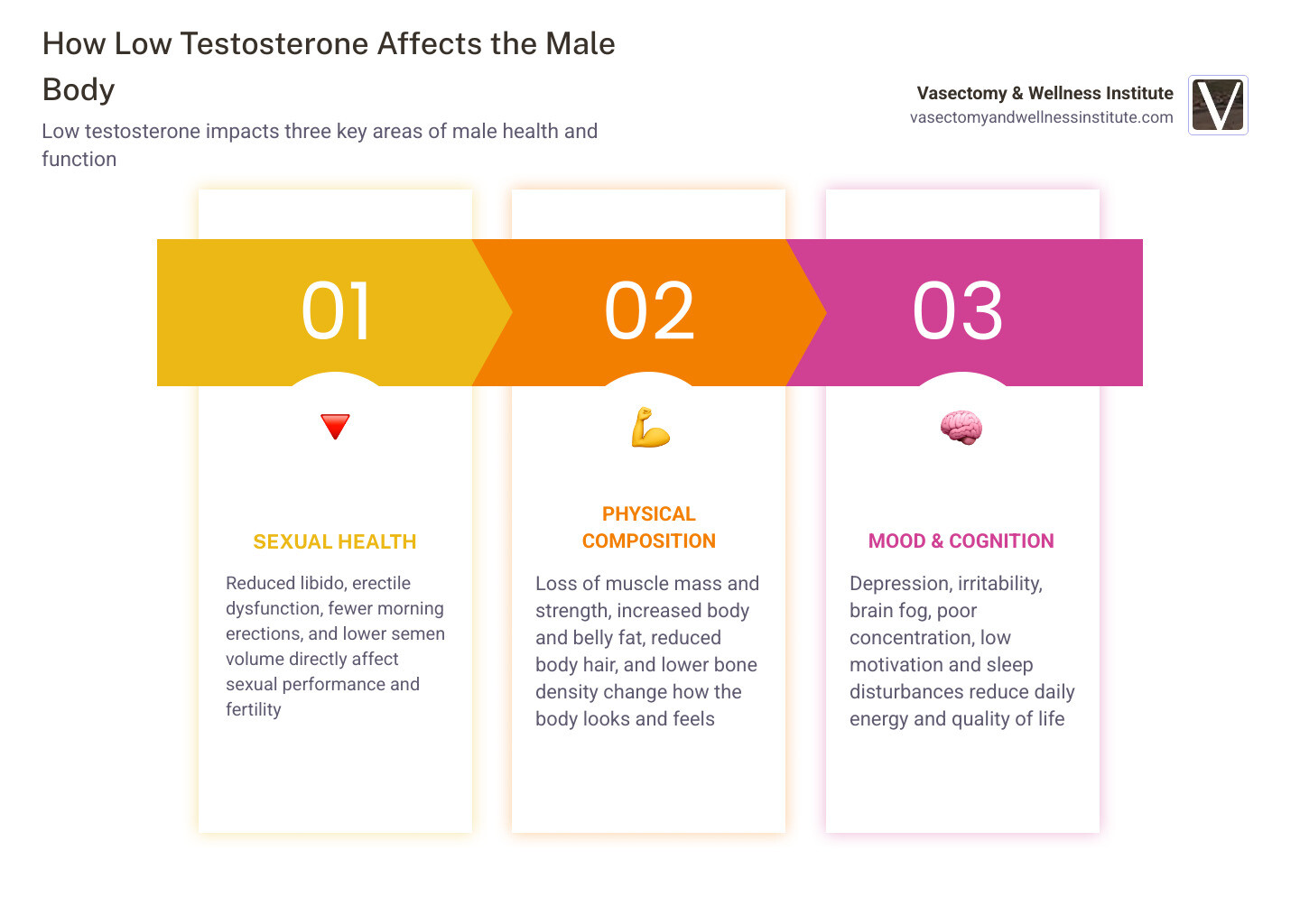
The most common low testosterone in male symptoms include:
| Category | Key Symptoms |
|---|---|
| Sexual | Low libido, erectile dysfunction, fewer morning erections, reduced semen |
| Physical | Fatigue, muscle loss, increased body fat, hair loss, gynecomastia |
| Mood & Mental | Depression, irritability, brain fog, poor concentration |
| Sleep | Insomnia, sleep disturbances |
| Other | Reduced bone density, low energy, hot flashes |
Feeling tired all the time. A shrinking drive for sex. Muscles that seem harder to build no matter how much you work out. These are signs many men brush off as “just getting older.”
But they may point to something more specific.
Low testosterone — also called male hypogonadism — is a condition where the testicles don’t produce enough of this critical hormone. Levels below 300 ng/dL are considered low in adult men. And it’s more common than most people realize: roughly 2 in every 100 men have it, and that number climbs to 40% of men over age 45.
What makes this condition easy to miss is that its symptoms overlap with stress, poor sleep, and normal aging. Many men go years without realizing their hormones may be the root cause of how they feel.
I’m Dr. Mustafa Ahmed MD, FACS, FAACS — a board-certified surgeon and internist with a background spanning internal medicine, critical care, and metabolic health, all of which intersect directly with the hormonal and physical changes seen in low testosterone in male symptoms. In this guide, I’ll walk you through everything you need to know — from recognizing the signs to understanding what causes them and what you can do next.
What Is Low Testosterone and How Common Is It?
Low testosterone, or male hypogonadism, means the body is not making enough testosterone for normal function. In men, most testosterone is made by Leydig cells in the testicles. Doctors usually consider total testosterone below 300 ng/dL low in adults, but the diagnosis is not based on a number alone. We need both symptoms and repeat lab confirmation.
This is also not rare.
Research shows:
- About 2 in 100 men have low testosterone
- Testosterone tends to decline about 1% per year starting in the late 30s
- Levels may fall by about 100 ng/dL every 10 years
- Around 40% of men older than 45 are hypogonadal
- About 50% of men in their 80s may meet criteria for hypogonadism
That said, a lower number on a blood test is not automatically a disease. Some men have low levels and no symptoms at all. Others feel quite symptomatic even when the lab value is only borderline low.
Why testosterone matters throughout life
Testosterone is involved in much more than sex drive.
Across life, it helps with:
- Puberty and male sexual development
- Sperm production
- Libido and sexual interest
- Morning and spontaneous erections
- Muscle mass and strength
- Bone density
- Red blood cell production
- Energy
- Mood and motivation
In other words, testosterone is not just the “sex hormone.” It is more like the body’s general operations manager. When levels drop too low, several systems can feel it.
When low testosterone becomes a medical condition
Low testosterone becomes a medical condition when a man has:
- Symptoms consistent with hypogonadism
- Low testosterone confirmed on proper testing
The right testing matters. Testosterone should usually be checked in the morning, often between 7 AM and 11 AM, because levels are naturally highest then. Most guidelines recommend two separate morning blood tests before confirming the diagnosis.
Temporary illness, poor sleep, stress, and some medications can lower testosterone for a short time. That is one reason why doctors should not diagnose low T from a single random lab draw at 3 PM after a rough week.
For a good medical overview, see Scientific research on low testosterone and diagnosis.
Low Testosterone in Male Symptoms: The Complete Symptom Checklist

The symptoms of low testosterone often fall into four groups:
- Sexual and fertility symptoms
- Physical body changes
- Mood and emotional changes
- Cognitive and sleep-related symptoms
Low testosterone in male symptoms that affect sex and fertility
Sexual symptoms are often what bring men in first.
Common signs include:
- Lower sex drive
- Fewer morning erections
- Fewer spontaneous erections
- Trouble getting or keeping an erection
- Reduced semen volume
- Fertility problems
- Smaller testicles in some cases
A key point: erectile dysfunction and low testosterone are related, but they are not the same thing. Many things can cause ED, including blood vessel disease, diabetes, stress, medications, and sleep problems. Still, when ED shows up alongside low libido and reduced morning erections, low testosterone becomes more suspicious.
Sexual warning signs to watch for:
- You are less interested in sex than usual
- Morning erections are less frequent or absent
- Erections are weaker or harder to maintain
- Ejaculate volume seems lower
- You and your partner are trying to conceive without success
About 15% of men with fertility problems have low testosterone levels. Just as important, some treatments for low testosterone can actually reduce sperm production, so family planning needs to be discussed before treatment starts.
Low testosterone in male symptoms that change the body
Low testosterone can also show up in the mirror, in the gym, or just in how your body feels day to day.
Common physical symptoms include:
- Ongoing fatigue
- Lower stamina
- Loss of muscle mass
- Reduced strength
- Increased body fat
- More abdominal or belly fat
- Loss of body or facial hair
- Swollen or tender breast tissue called gynecomastia
- Hot flashes
- Lower bone density
- Osteoporosis
- Possible anemia
Some men notice that workouts stop “working” the way they used to. Others gain fat more easily even when their habits have not changed much. Low T can also contribute to weaker bones over time, which raises fracture risk.
It is not all vanity. If your arms, legs, and core are losing strength while your waistline grows, that can affect balance, metabolic health, and quality of life.
Low testosterone in male symptoms that affect mood, sleep, and focus
Low testosterone does not only affect the body below the neck. It can affect how a man feels, thinks, and functions.
Common emotional and mental symptoms include:
- Depression
- Irritability
- Low motivation
- Apathy
- Less enjoyment in usual activities
- Brain fog
- Trouble concentrating
- Mild memory problems
- Poor sleep
- Lower quality of life
These symptoms are tricky because they overlap with many other issues, especially stress, burnout, depression, sleep deprivation, and obstructive sleep apnea.
That is why we never recommend self-diagnosing from symptoms alone. If low T is the cause, treatment may help. But if the real issue is untreated sleep apnea, thyroid disease, or depression, testosterone alone will not fix it.
Symptoms of Low Testosterone in Children and Teens

Low testosterone can also affect boys, but the symptoms depend on when the hormone problem begins.
Signs in babies and children
If hypogonadism starts before birth or early in life, signs may include:
- Atypical genital development
- Undescended testicles
- Smaller than expected genital size
These cases are often linked to congenital or genetic causes and need specialist evaluation.
Signs during adolescence
During puberty, testosterone helps drive many expected developmental changes. If levels are too low, puberty may be delayed or incomplete.
Possible signs include:
- Delayed puberty
- Little or no deepening of the voice
- Limited facial and body hair
- Less muscle development
- Poor growth or reduced growth spurt
- Small testes
- Delayed genital growth
- Emotional distress about lagging behind peers
Because these changes can deeply affect self-image, social development, and future fertility, evaluation should not be delayed.
For a deeper review, see Scientific research on low testosterone in adolescents.
When puberty-related symptoms need prompt evaluation
A child or teen should be evaluated promptly if there is:
- Significant delay in puberty
- Poor growth
- Concern about genital development
- Very limited progression through puberty
- Fertility-related concern later in adolescence
These cases are typically handled with pediatric and endocrine input.
Causes and Risk Factors: Primary vs Secondary Hypogonadism
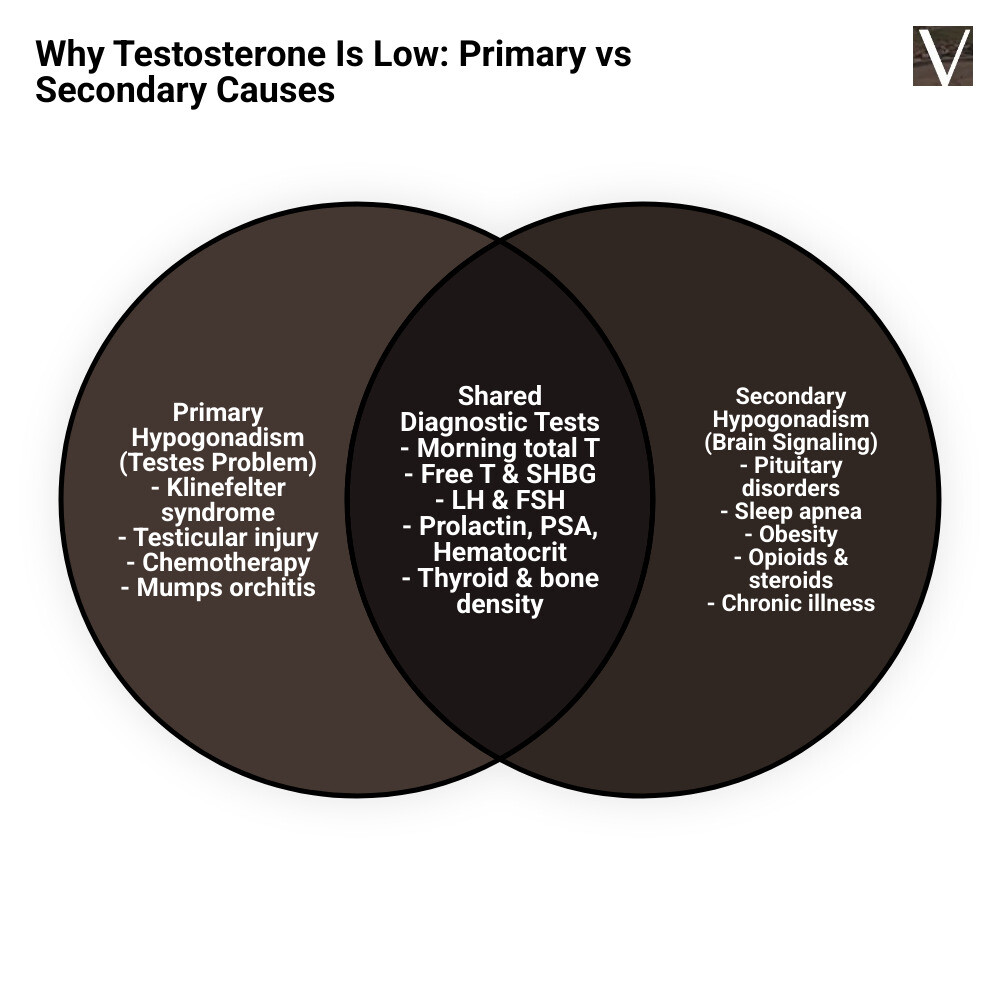
Doctors divide male hypogonadism into two broad types.
| Type | Main problem | Typical lab pattern |
|---|---|---|
| Primary hypogonadism | The testicles are not producing enough testosterone | Low testosterone with high LH/FSH |
| Secondary hypogonadism | The pituitary or hypothalamus is not signaling properly | Low testosterone with low or inappropriately normal LH/FSH |
Primary hypogonadism: when the testicles are the problem
Primary hypogonadism starts in the testicles themselves.
Possible causes include:
- Klinefelter syndrome
- Undescended testicles
- Mumps orchitis
- Testicular injury
- Hemochromatosis
- Chemotherapy
- Radiation treatment
- Testicular tumors
In this type, the brain may be trying to stimulate testosterone production, but the testicles cannot respond normally.
Secondary hypogonadism: when the brain signaling is the problem
Secondary hypogonadism happens when the hypothalamus or pituitary gland is not sending the right signals.
Causes include:
- Pituitary disorders
- Hypothalamic disease
- Kallmann syndrome
- Elevated prolactin
- Obesity
- Obstructive sleep apnea
- HIV
- Certain medications
- Thyroid disease
- Chronic illness
- Aging
This form is especially important because some underlying causes are treatable. For example, weight loss, sleep apnea treatment, medication review, or treatment of a pituitary issue may improve testosterone levels.
Who is at higher risk for low testosterone?
Some men are more likely to develop low T.
Higher-risk groups include men with:
- Type 2 diabetes
- Obesity
- Metabolic syndrome
- Infertility
- Osteoporosis
- Severe chronic lung disease
- Heavy alcohol use
- Opioid use
- Severe stress
- Malnutrition
Research cited in the source material found testosterone deficiency in 29% of nonobese diabetic males, which shows that diabetes can matter even without obesity.
How Low Testosterone Is Diagnosed and Confirmed
A good diagnosis starts with the basics:
- Medical history
- Symptom review
- Physical exam
- Proper lab testing
The right way to test for low testosterone
Best practice usually includes:
- Measuring total testosterone
- Drawing blood in the morning
- Often using a fasting sample
- Repeating the test on two separate occasions
Why so careful? Because testosterone changes during the day, and lab values can vary. Illness, poor sleep, and stress can temporarily lower levels.
Guidelines generally support morning testing between 7 AM and 11 AM or 8 AM and 10 AM, depending on the source. In adults, a total testosterone level under 300 ng/dL on repeat testing is a common threshold used in practice.
Other tests doctors may order
Depending on symptoms and the first lab results, doctors may order:
- Free testosterone
- SHBG
- LH
- FSH
- Prolactin
- PSA in appropriate patients
- Hematocrit or hemoglobin
- Thyroid tests
- Pituitary imaging in select cases
- Bone density testing if osteoporosis is suspected
These tests help answer a bigger question: why is testosterone low?
They also help separate primary from secondary hypogonadism and make treatment safer.
A concerning statistic from the research: up to 25% of men on testosterone therapy have not had testosterone levels checked before starting, and up to 33% may not meet diagnostic criteria. That is exactly why proper evaluation matters.
Conditions that can mimic low testosterone symptoms
Several conditions can look a lot like low T, including:
- Depression
- Chronic stress
- Poor sleep
- Obstructive sleep apnea
- Thyroid problems
- Medication side effects
- Chronic disease
- Normal aging
This is one of the most important parts of the whole topic. Many low testosterone symptoms are nonspecific. If testosterone is corrected but symptoms do not improve after about 3 months, doctors should consider other causes.
For more on workup and evaluation, see Scientific research on evaluation of male hypogonadism.
Treatment Options, Fertility Considerations, and When to See a Doctor
Treatment depends on the cause, symptom severity, lab results, age, and fertility goals.
Lifestyle changes that may improve symptoms or support treatment
For some men, the first step is not a prescription. It is improving the conditions that drag testosterone down.
Helpful steps include:
- Losing excess weight
- Doing resistance training
- Staying physically active
- Eating a balanced diet
- Sleeping at least 7 hours when possible
- Getting evaluated and treated for sleep apnea
- Reducing alcohol use
- Avoiding misuse of addictive substances
- Improving diabetes control
These changes may not turn every low testosterone case around, but they can improve symptoms, support overall health, and make any medical treatment work better.
Testosterone replacement therapy: forms, benefits, and monitoring
If low testosterone is confirmed and symptoms are significant, testosterone replacement therapy, or TRT, may be considered.
Common forms include:
- Skin gels
- Injections
- Pellets
- Nasal gel
- Oral testosterone in selected situations
Potential benefits may include improvements in:
- Libido
- Energy
- Mood
- Muscle mass
- Bone health
- Sexual function in some men
Monitoring is essential. Men on TRT should have regular follow-up visits and repeat labs to check testosterone level, blood count, and other safety markers. Some experts target a mid-normal range, often around 450 to 600 ng/dL, though treatment is individualized.
No meaningful symptom improvement after about 3 months despite normalized levels suggests testosterone may not be the full explanation.
TRT risks, side effects, and who should avoid it
TRT can be useful, but it is not risk-free.
Possible risks and side effects include:
- Infertility
- Acne or oily skin
- Increased hematocrit
- Blood clot risk
- Fluid retention or edema
- Breast tenderness or enlargement
- Worsening untreated sleep apnea in some cases
- Need for prostate monitoring in appropriate patients
TRT is generally avoided or used with extreme caution in men with:
- Prostate cancer
- Breast cancer
- Very high hematocrit
- Recent major cardiovascular events
Some sources recommend avoiding initiation for at least 3 to 6 months after a major cardiovascular event.
Fertility and low testosterone: what men should know before treatment
This is the section many men wish they had heard before starting therapy.
Testosterone is important for sperm production, but taking outside testosterone can shut down the body’s own sperm-making signals. So TRT is not a fertility treatment. In fact, it often makes fertility worse while you are taking it.
If a man wants children now or in the future, we should discuss that before treatment begins.
Options that may help preserve fertility in selected patients include:
- Clomiphene
- hCG
- Sperm banking before treatment
Some guidance cited in the research identifies clomiphene citrate as a first-line option for hypogonadal men who want to preserve fertility. Recovery of sperm production after stopping testosterone often happens, but it may take time.
When to see a healthcare provider about possible low testosterone symptoms
It is time to get evaluated if you have:
- Persistent fatigue
- Low libido
- Erectile changes
- Fewer morning erections
- Fertility problems
- Muscle loss
- Increased body fat
- Depression or brain fog without a clear reason
- Hot flashes
- Bone fractures or known low bone density
- Testicular changes
- Delayed puberty in a teen
A primary care clinician, urologist, or endocrinologist may be involved depending on the situation.
For a trusted overview, see Scientific research on symptoms, causes, and treatment.
Next steps for men’s wellness support
At Vasectomy & Wellness Institute, we understand that hormone-related symptoms can affect energy, mood, sex life, and long-term health. If you are in Henderson, Nevada and want guidance on men’s wellness concerns, you can learn more here: More info about services
Frequently Asked Questions About Low Testosterone in Male Symptoms
Can you have low testosterone without erectile dysfunction?
Yes. Some men with low testosterone have low libido, fatigue, mood changes, or reduced morning erections without full erectile dysfunction. Others may have ED from causes unrelated to testosterone.
Does every man with a low blood test need treatment?
No. Treatment is generally for men who have both:
- Symptoms
- Confirmed low testosterone on repeat testing
A single low reading without symptoms usually does not mean automatic treatment.
How long does it take to feel better after treatment starts?
It varies. Some men notice changes in energy, libido, or mood within weeks, while other benefits take months. Research in the source material noted symptom relief may occur within 3 to 60 weeks, depending on the symptom and treatment response. Follow-up labs and symptom tracking are important.
Conclusion
The full list of low testosterone in male symptoms includes sexual changes, fatigue, muscle loss, body fat gain, mood shifts, sleep problems, brain fog, and fertility issues. In boys and teens, it may show up as delayed puberty or poor development.
The key takeaway is simple: symptoms matter, but diagnosis requires proper testing. We should not assume every tired, stressed, or aging man has low testosterone, and we should not start treatment without confirming the problem.
Fertility deserves special attention. If future children matter to you, talk about that before starting testosterone therapy, because standard TRT can suppress sperm production.
If symptoms have been lingering, it is worth getting checked instead of guessing. A thoughtful evaluation can identify low testosterone, rule out look-alike conditions, and guide the safest next step.
For a straightforward primer, see Scientific research on low testosterone basics. If you are looking for local men’s wellness support in Henderson, visit More info about services.