

What You Need to Know About After Vasectomy Recovery
After vasectomy recovery is straightforward for most men, with the majority back to desk work within 24 hours and fully active within 1-2 weeks.
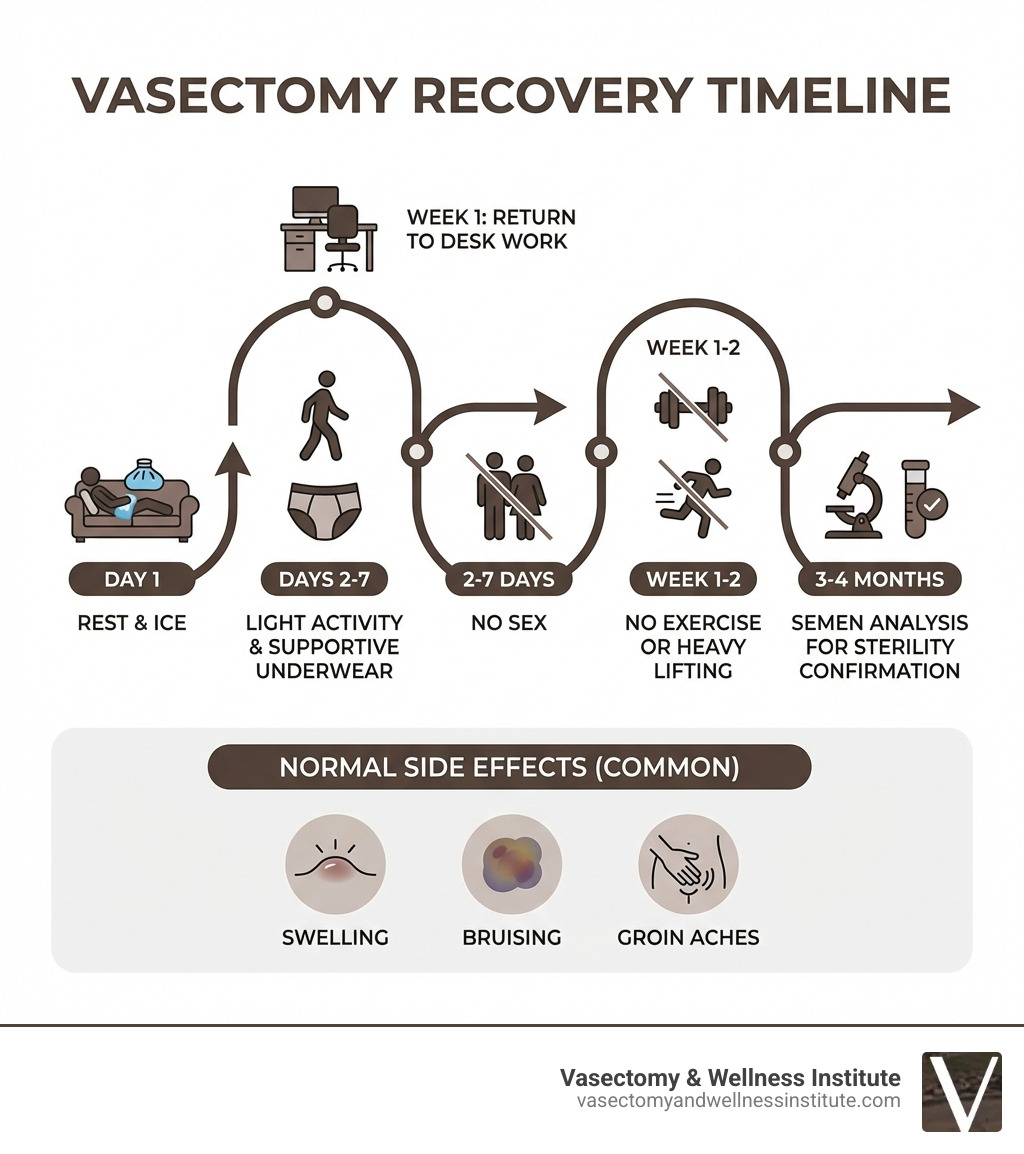
Here is a quick overview of the key recovery milestones:
| Timeline | What to Expect |
|---|---|
| First 24-48 hours | Rest, ice packs, minimal activity |
| Days 1-7 | Soreness, swelling, bruising — normal and manageable |
| 2-7 days | Avoid sexual activity |
| 1-2 weeks | No heavy lifting or strenuous exercise |
| 3-4 months | Semen analysis to confirm sterility |
A vasectomy is one of the most reliable forms of permanent birth control available. The procedure itself takes only 15-20 minutes. But the days and weeks after the procedure matter just as much as the surgery itself.
Most men are surprised by how manageable recovery actually is. The biggest concerns — pain, downtime, and impact on sexual health — are far less serious than many expect.
This guide walks you through everything: what to feel, what to do, what to avoid, and when you are in the clear.
What to Expect During After Vasectomy Recovery
When the local anesthesia begins to wear off a few hours after your procedure, you might feel a mild dull ache or a “pulling” sensation in the scrotum and lower abdomen. This is completely normal. Because the nerves in the testicles share pathways with the abdomen, it is common to feel a bit of a stomach ache or groin pressure even though the work was done lower down.
Immediate after vasectomy recovery focuses on three things: rest, ice, and support. We recommend arranging a ride home from our Henderson clinic, especially if you opted for a mild sedative to help you relax during the procedure. Once home, your job is to be a professional couch potato for the first 48 hours.
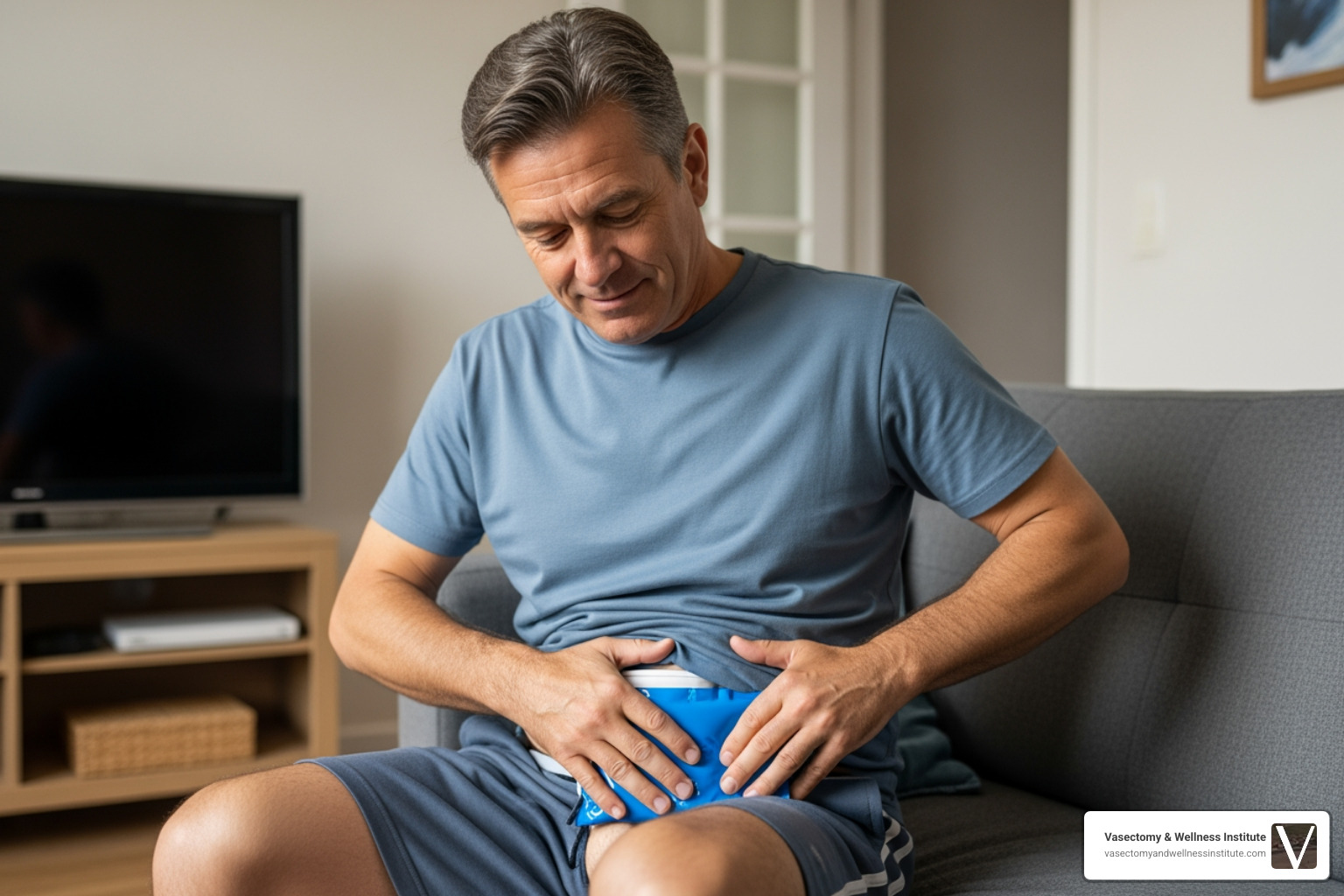
During these first few days, you will likely notice some bruising and swelling. The skin of the scrotum may turn shades of blue, purple, or even black and then yellow as it heals—much like a bruised arm. This usually resolves within one to two weeks.
For a detailed look at the healing process, the Vasectomy: What to Expect at Home guide provides excellent context on the day-to-day changes you might see.
Managing Pain and Discomfort After Vasectomy Recovery
Managing discomfort is usually quite simple. We generally recommend sticking to acetaminophen (Tylenol). It is important to avoid aspirin or ibuprofen (Advil/Motrin) for the first 48 hours unless otherwise directed, as these can thin the blood and increase the risk of bruising or a hematoma.
- The Ice Rule: Apply an ice pack or a bag of frozen peas (wrapped in a thin towel) to the area for 20 minutes on and 20 minutes off. Do this as much as possible for the first 48 to 72 hours.
- Elevation: When lying down, try to keep your feet slightly elevated. This helps minimize swelling and prevents blood from pooling in the scrotal area.
- Supportive Underwear: This is the time to ditch the boxers. Tight-fitting underwear, such as snug briefs or a jockstrap, is essential. It keeps the “boys” from moving around, which significantly reduces the dull ache associated with gravity.
If you are curious about how our specific no-needle/no-scalpel technique further minimizes this discomfort, you can find more info about vasectomy services on our dedicated service page.
Normal Side Effects vs. Warning Signs
Most men experience a “pea-sized” lump on either side of the scrotum. This is typically just a small amount of scar tissue where the vas deferens was sealed and usually resolves on its own over several weeks. You may also see a tiny amount of blood in your semen during your first few ejaculations—this is common and harmless.
However, you should be aware of “red flags.” While complications are rare, symptom guidance from the NHS suggests contacting your doctor if you experience:
- A fever over 100.4°F (38°C).
- Large, rapidly increasing swelling (a hematoma).
- Redness, warmth, or pus draining from the puncture site.
- Pain that is not controlled by your medication and ice.
Activity Restrictions and Returning to Normal Life
In after vasectomy recovery, “taking it easy” is the golden rule. For the first 24 hours, you should limit your walking to essential trips (like to the bathroom). By the second or third day, you can begin walking a little more around the house, but listen to your body.
- Driving: Most men can drive within 24–48 hours, provided they are no longer taking sedatives and can comfortably perform an emergency stop without pain.
- Returning to Work: If you have a desk job, you can often return within 24 to 48 hours. If your job involves physical labor or standing all day, we recommend taking at least 3 to 7 days off.
- The 20-Pound Limit: Avoid lifting anything heavier than 20 pounds for the first full week. This includes groceries, children, and gym equipment. Straining the abdominal muscles can increase pressure in the scrotum and delay healing.
For more specific answers to common lifestyle questions, visit our FAQs about daily life.
Resuming Exercise and Physical After Vasectomy Recovery
We know our Henderson patients love to stay active, but patience is key here. High-impact activities like jogging, biking, or heavy weightlifting should be avoided for at least 7 days. Biking is particularly tricky because of the direct pressure the seat puts on the surgical site; many men prefer to wait 2 weeks before getting back on a saddle.
When you do return to the gym, start at 50% intensity. If you feel any “tugging” or aching, stop and give it another day or two. Swimming and hot tubs should also be avoided for at least 5 days to ensure the small puncture site has completely closed and to prevent infection.
Sexual Activity and Confirming Sterility
One of the most common questions we hear is: “When can I get back to business?”
The general rule is to wait 7 days before resuming sexual activity or masturbation. This gives the vas deferens time to seal properly and reduces the risk of bleeding. Your first few ejaculations might feel slightly different or cause a mild ache in the groin, but this quickly fades.
It is vital to remember that a vasectomy is not effective immediately. There is still “live ammunition” left in the upper part of the tubes. According to effectiveness statistics, about 15 in 10,000 couples may still get pregnant in the year following a vasectomy if they do not follow post-op testing protocols. You must continue using a backup form of birth control until we give you the “all-clear.”
The Importance of the Follow-Up Semen Analysis
To confirm that the procedure was a success, you will need to provide a semen sample for analysis. This is usually done about 3 to 4 months after the procedure, or after you have had at least 20 to 30 ejaculations. This ensures all remaining sperm have been flushed out of the system.
During this period, your body harmlessly absorbs any new sperm produced by the testicles. Once the lab confirms a “zero sperm count” or only rare non-motile sperm, you can finally stop using other forms of birth control. If you are ready to start this journey, you can request a consultation with our team in Henderson.
Frequently Asked Questions about Vasectomy Healing
Does a vasectomy affect sexual performance or libido long-term?
Absolutely not. This is perhaps the most common myth we encounter. A vasectomy only blocks sperm; it does not change your testosterone levels, your sex drive (libido), your ability to get an erection, or the sensation of orgasm. In fact, many couples report better sex lives because the fear of an unplanned pregnancy has been removed.
When is it safe to shower, bathe, or swim?
You can typically take a gentle shower 24 hours after the procedure. Avoid scrubbing the area—just let soapy water run over it and pat it dry gently. You should avoid soaking in a bathtub, swimming pool, or hot tub for at least 5 to 7 days to prevent infection.
What are the differences between no-scalpel and traditional recovery?
Traditional vasectomies involve one or two incisions made with a scalpel, which often require stitches. Our no-needle/no-scalpel technique uses a tiny puncture to access the vas deferens. Because there is no cutting of the skin, there is significantly less bleeding, less swelling, and a lower risk of infection. Most men find the after vasectomy recovery for the no-scalpel method to be much faster and less painful.
Conclusion
At the Vasectomy & Wellness Institute in Henderson, Nevada, we specialize in making the sterilization process as stress-free as possible. Our minimally invasive, no-needle/no-scalpel approach is designed specifically for quick healing and minimal downtime. By following these recovery guidelines—resting for 48 hours, using ice packs, and wearing supportive underwear—you’ll be back to your normal routine before you know it.
If you have any questions during your healing journey or are ready to schedule your procedure, please contact us for more information. We are here to ensure your path to permanent contraception is safe, comfortable, and successful.