

Why Finding the Best Men’s Doctor Near Me Changes Your Health Outcomes
Finding the best mens doctor near me is one of the most important health decisions a man can make — and one of the most overlooked.
Here’s a quick answer if you’re short on time:
How to find the best men’s doctor near you:
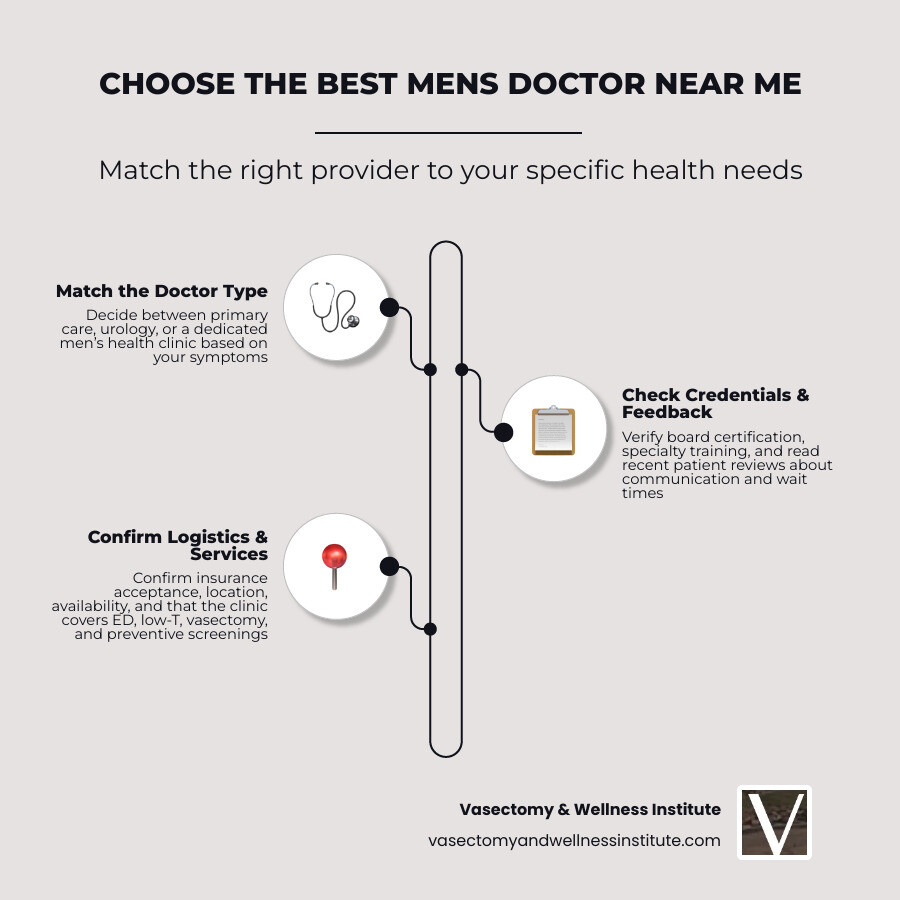
- Decide what you need — primary care, urology, or a dedicated men’s health clinic
- Check credentials — look for board certification and relevant specialty training
- Review patient feedback — focus on recent reviews, wait times, and communication
- Confirm logistics — verify insurance acceptance, location, and appointment availability
- Ask about services — ensure they cover your specific needs (ED, low testosterone, vasectomy, preventive screenings, etc.)
Men often delay getting care — or settle for a provider who isn’t the right fit. The result? Problems that could have been caught early get worse. Conditions like erectile dysfunction (which affects 30 to 50 million men in the U.S.), low testosterone, and prostate issues are very treatable — but only when you’re working with the right doctor.
The best men’s health providers don’t just treat symptoms. They look at root causes, coordinate with specialists, and build a long-term picture of your health.
That matters whether you’re coming in for a routine wellness visit, a hormone check, or something more personal like a vasectomy.
I’m Dr. Mustafa Ahmed MD, FACS, FAACS — a board-certified surgeon and internist with experience in minimally invasive procedures and men’s wellness care, which puts me in a strong position to help you identify the best mens doctor near me for your specific needs. In this guide, I’ll walk you through exactly what to look for, what to expect, and how to make a confident, informed choice.
Start With the Right Type of Doctor for Your Needs
The first step is simple: match the doctor to the problem.
Not every men’s health issue needs the same kind of provider. Sometimes the best choice is a primary care doctor. Sometimes it is a urologist. Sometimes a men-focused clinic makes the process easier because the services, screening approach, and communication style are built around male health concerns from day one.
Here is a quick comparison:
| Provider type | Best for | May include |
|---|---|---|
| Primary care | Annual exams, blood pressure, cholesterol, diabetes screening, vaccines, routine labs | Referrals to specialists, preventive care, general health management |
| Urology or procedure-focused care | Urinary symptoms, kidney stones, prostate concerns, infertility, vasectomy, sexual function issues | Imaging, procedures, reproductive and urinary system expertise |
| Men’s health clinic | Low testosterone, ED, sexual wellness, prevention, lifestyle review, coordinated male-focused care | Tailored screening, discreet visits, streamlined follow-up, referrals as needed |
When a primary care doctor is the best mens doctor near me
If you need a yearly checkup, vaccine updates, help managing blood pressure, diabetes screening, cholesterol monitoring, or routine lab work, primary care is often the best place to start.
A strong primary care doctor can:
- track long-term health trends
- order preventive screenings
- manage common chronic conditions
- review medications
- refer you when a specialist is needed
This matters because many men’s health complaints are connected to broader health issues. For example, fatigue may be tied to sleep problems, thyroid issues, stress, low testosterone, or uncontrolled blood sugar. A good doctor helps sort that out instead of guessing.
When to choose a specialist instead
Some issues need more focused training and equipment. Men should usually look for specialty care when dealing with:
- erectile dysfunction
- low testosterone or hormone concerns
- infertility
- urinary symptoms
- prostate problems
- kidney stones
- vasectomy questions
- STI testing or genital concerns
- HPV-related concerns
Two examples from the research make this clear:
- Erectile dysfunction is common, affecting an estimated 30 to 50 million men in the United States.
- According to CDC-cited data in the research, about 13 million Americans get HPV each year, and nearly every sexually active adult will contract it at some point.
Those are not niche issues. They are everyday men’s health concerns, and they deserve proper evaluation.
If your concern is reproductive planning, a procedure such as vasectomy, or questions about reversal, specialist-level experience becomes especially important. You can learn more in our guides on no-needle vasectomy specialists and vasectomy reversal basics.
How men’s health clinics differ from general primary care
A men’s health clinic is not automatically “better” than primary care. It is just different.
The best clinics for men usually offer:
- male-focused visits and screening priorities
- more time spent on sexual and reproductive concerns
- discreet, privacy-conscious care
- easier discussion of sensitive topics
- lifestyle review covering sleep, exercise, stress, and weight
- referrals when endocrine, cardiac, or urologic issues may be involved
That last point matters a lot. Low testosterone, for example, is not always a stand-alone issue. ED can also be linked to blood vessel disease, medication side effects, or metabolic health. In other words: the body is annoyingly connected.
Top Signs You’ve Found the Best Mens Doctor Near Me
Once you know what kind of provider you need, the next step is quality.
A good listing in a search result is not enough. A polished website is not enough. The best mens doctor near me should show real signs of expertise, communication, and consistency.

Look for these markers:
- board certification in a relevant field
- experience treating men’s health concerns regularly
- evidence-based care instead of trendy shortcuts
- clear explanations in plain language
- respectful bedside manner
- realistic follow-up plans
- strong coordination with labs, imaging, or referrals
Specialized training that matters for complex men’s health issues
For more complex conditions, training matters.
Depending on the issue, helpful backgrounds may include:
- urology
- internal medicine
- family medicine with men’s health focus
- sexual medicine
- endocrinology
- andrology
- minimally invasive procedural expertise
If you are looking for vasectomy care in Henderson, specialized procedural experience is especially important. At Vasectomy & Wellness Institute, we focus on men’s wellness and minimally invasive no-needle, no-scalpel procedures designed for comfort and a quicker return to normal activity.
That kind of experience can make a real difference in:
- patient comfort
- efficiency
- recovery expectations
- aftercare instructions
- complication prevention
Why a multidisciplinary team leads to better outcomes
One of the smartest ideas in the research is that the best men’s health care often comes from treating root causes, not just symptoms.
A multidisciplinary approach may involve:
- internal medicine for whole-body risk assessment
- endocrinology for hormone and metabolic issues
- cardiology for circulation and heart-risk evaluation
- urology for urinary and reproductive concerns
- pulmonology or sleep evaluation when fatigue or sleep apnea may be involved
This approach improves care because many symptoms overlap. ED may be a sexual health issue, but it can also be a cardiovascular warning sign. Low energy may look hormonal but turn out to be sleep apnea, depression, medication effects, or poor blood sugar control.
The right doctor knows when to treat, when to test, and when to bring in another specialty.
Reviews, ratings, and reputation checks that actually help
Patient reviews are useful, but only if you read them carefully.
A clinic with perfect reviews but no detail tells you very little. A clinic with many recent reviews that consistently mention communication, professionalism, follow-up, and smooth scheduling tells you much more.
Use this checklist:
- Are the reviews recent?
- Is there enough review volume to spot patterns?
- Do patients mention listening skills?
- Do they mention whether they felt rushed?
- Are wait times discussed?
- Is follow-up care mentioned?
- Is online scheduling available?
- Does the clinic clearly explain insurance and next steps?
- Are there signs of organized office operations?
You should also verify practical details through the clinic itself, not only third-party platforms.
Services to Look for in a High-Quality Men’s Health Clinic
A good men’s doctor should not be one-dimensional.
Even if you are searching because of one issue, it helps when your clinic can address the broader picture. That may include preventive care, sexual health, hormone review, and referrals when needed.

At a minimum, a high-quality men’s health clinic should be able to discuss or coordinate care for:
- wellness exams
- low testosterone concerns
- erectile dysfunction
- prostate health
- fertility questions
- STI screening
- HPV prevention and vaccine counseling
- sleep and fatigue concerns
- nutrition and exercise habits
- mental health screening
- telemedicine follow-ups
You can explore our full services to see how a men-focused practice can support both preventive and procedure-based care.
Sexual and reproductive services men often search for first
For many men, the first search is not “wellness exam.” It is usually something more urgent or personal.
Common reasons include:
- trouble with erections
- fertility concerns
- semen testing questions
- birth control planning
- interest in vasectomy
- questions about reversal later on
These concerns deserve direct, judgment-free care. No awkwardness, no lectures, no weird silence while everyone studies the ceiling.
If your main goal is permanent contraception, look for a doctor with experience in minimally invasive technique and clear recovery instructions. Our related resources include:
- A Guide to the Best No-Needle Vasectomy Specialists
- Everything You Need to Know About Reversing a Vasectomy
- Cutting Out the Worry by Finding the Best Vasectomy Experts
- The Best Places to Get Snipped in Henderson
- Where to Get a Vasectomy Henderson NV Style
Preventive care and screenings that should not be skipped
One of the biggest mistakes men make is waiting until something feels dramatic.
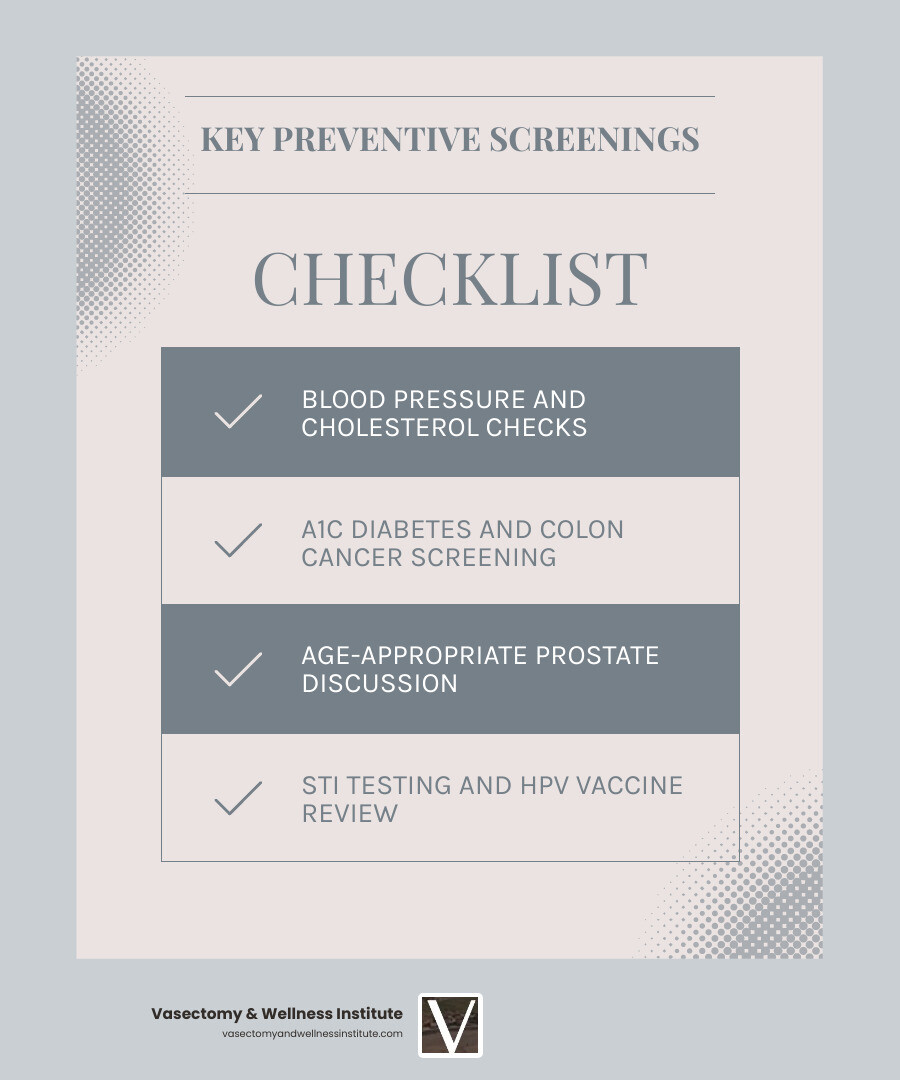
A better plan is consistent preventive care, including:
- blood pressure checks
- cholesterol and lipid screening
- A1C or diabetes screening
- age-appropriate colon cancer screening
- prostate discussions based on age and risk
- skin checks when appropriate
- vaccine review
- STI testing when indicated
- HPV vaccine counseling
That HPV point deserves emphasis. The research notes that about 13 million Americans are infected each year, and nearly every sexually active adult is exposed at some point. Men often think HPV is someone else’s issue. It is not.
Prevention is usually easier than treatment, and much less stressful than late discovery.
Virtual visits and convenience features worth prioritizing
Convenience is not a bonus anymore. It is part of quality.
When comparing clinics, look for:
- telemedicine for follow-ups
- medication checks
- lab review visits
- patient portal messaging
- online scheduling
- same-day or next-day visits when available
- efficient refill processes
Virtual visits are especially helpful for:
- reviewing test results
- discussing treatment response
- answering medication questions
- planning next steps after labs
- deciding whether an in-person exam is needed
That said, telemedicine cannot replace everything. Procedures, physical exams, imaging, and some reproductive or urinary evaluations still require in-person care.
What to Expect at Your First Visit
A lot of men put off booking because they do not know what the first appointment will be like.
Usually, it is much less dramatic than expected.
At an initial men’s health visit, expect discussion around:
- your current symptoms
- past medical history
- medications and supplements
- family history
- sexual health
- urinary symptoms
- sleep quality
- diet and exercise
- alcohol, tobacco, or other substance use
- stress and mental health
- vital signs and possible lab work
The goal is not to make things awkward. The goal is to understand your health in context.
Questions to ask before you book the best mens doctor near me
Before scheduling, ask smart questions. This saves time and helps you choose confidently.
Try these:
- What conditions do you treat most often for men?
- Do you offer telehealth visits?
- What testing can be done or ordered?
- How do referrals work if I need a specialist?
- What follow-up plan should I expect?
- What insurance plans do you accept?
- How long is the first appointment?
- Are procedures done in-office if needed?
If you are considering a procedure, ask specifically about technique, recovery, and aftercare instructions.
What happens during the initial consultation
The first visit often includes a broad health risk assessment.
Depending on your symptoms, the doctor may:
- review your general health and risk factors
- perform a focused physical exam
- order blood work or urine testing
- discuss testosterone testing if appropriate
- evaluate possible causes of ED
- discuss fertility history
- talk through lifestyle factors such as sleep, weight, and stress
- create a treatment or next-step plan
A high-quality doctor should explain what is known, what is still uncertain, and what happens next. You should leave understanding the plan, not wondering if there was a secret second appointment that only the doctor attended.
Why location, availability, and insurance still matter
A great doctor who is impossible to reach is not very helpful.
Practical factors matter more than people think:
- How close is the clinic to home or work?
- Is parking easy?
- How long does it usually take to get an appointment?
- Are there same-day or prompt visits for urgent concerns?
- Is the office responsive by phone or online?
- Do they accept your insurance?
Research on men’s primary care models shows many patients value simple scheduling, low-friction visits, and broad plan acceptance. Commonly accepted plans at top providers often include:
- Aetna
- Blue Cross Blue Shield
- Cigna
- UnitedHealthcare
- Medicare
- Medicaid
Coverage always varies, so confirm directly before your visit.
For local care in Henderson, Nevada, convenience matters even more. If the clinic is nearby, easy to contact, and built around men’s needs, you are more likely to actually go. That may be the most underrated health strategy of all.
Frequently Asked Questions About Finding the Best Mens Doctor Near Me
What are the most common men’s health issues that need specialized care?
The most common issues include:
- erectile dysfunction
- low testosterone
- infertility
- prostate concerns
- kidney stones
- urinary symptoms
- HPV-related concerns
- STI evaluation
Specialized care is helpful when symptoms are persistent, private, complex, or tied to procedures and reproductive planning.
How can I tell if reviews for the best mens doctor near me are trustworthy?
Look for:
- verified or platform-linked reviews when possible
- enough total reviews to show a pattern
- recent comments, not only old praise
- specific details about communication and follow-up
- mentions of scheduling, staff professionalism, and wait times
- consistency across multiple review platforms
Be cautious if all reviews sound generic or if there is no mention of actual care experience.
Is telemedicine enough, or do I still need in-person men’s health visits?
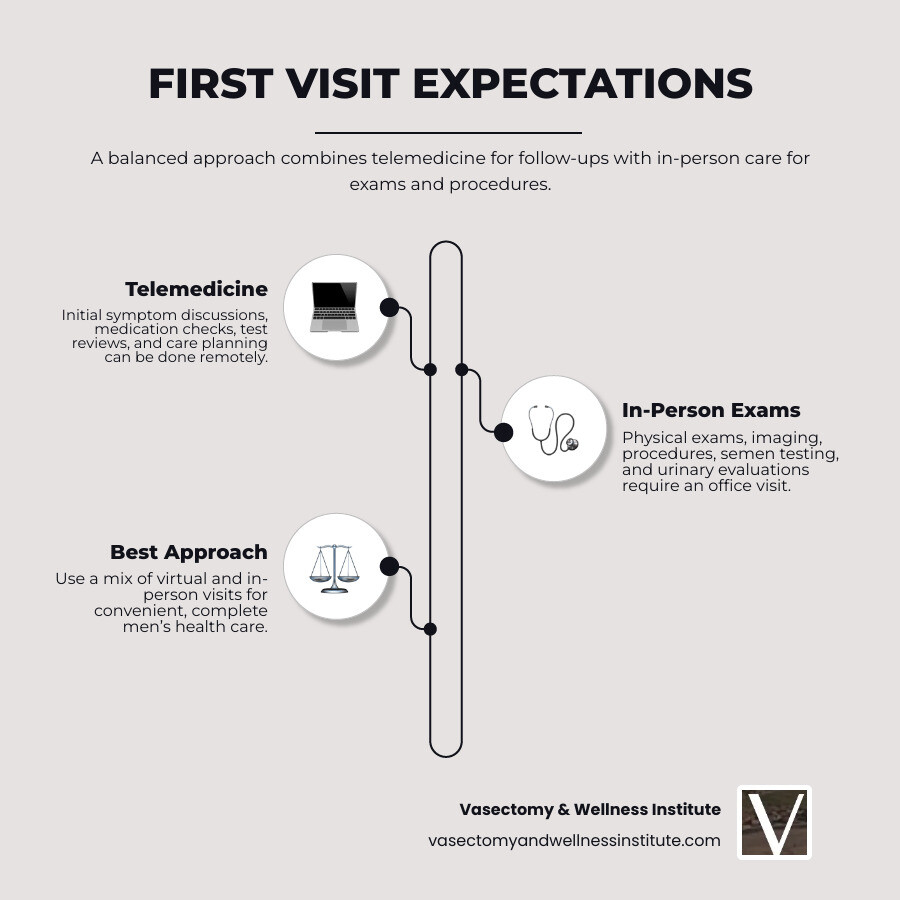
Telemedicine is excellent for:
- discussing symptoms initially
- follow-up visits
- medication checks
- test review
- care planning
In-person visits are still necessary for:
- physical exams
- imaging
- procedures
- semen-related testing
- many urinary or genital evaluations
- vasectomy consultations and treatment
The best approach is usually a mix of both.
Conclusion
Finding the best mens doctor near me is really about fit, expertise, and follow-through.
Start by identifying what you need. Check training. Look at reviews with a critical eye. Confirm insurance and availability. Make sure the clinic offers the services that matter to your health now and in the future.
If you are in Henderson, Nevada and want men-focused care that is private, practical, and designed around real-life concerns, we invite you to learn more about our services, request a consultation, or contact us.
For more about who we are and how we approach care, visit our About Us page.
The right doctor should make it easier to take care of yourself, not harder. And yes, that includes finally booking the appointment you have been putting off since approximately the invention of email.