

Can Vasectomy Be Reversed? Here’s What You Need to Know
Can vasectomy be reversed — and the short answer is yes, in most cases it can. Here’s the quick version:
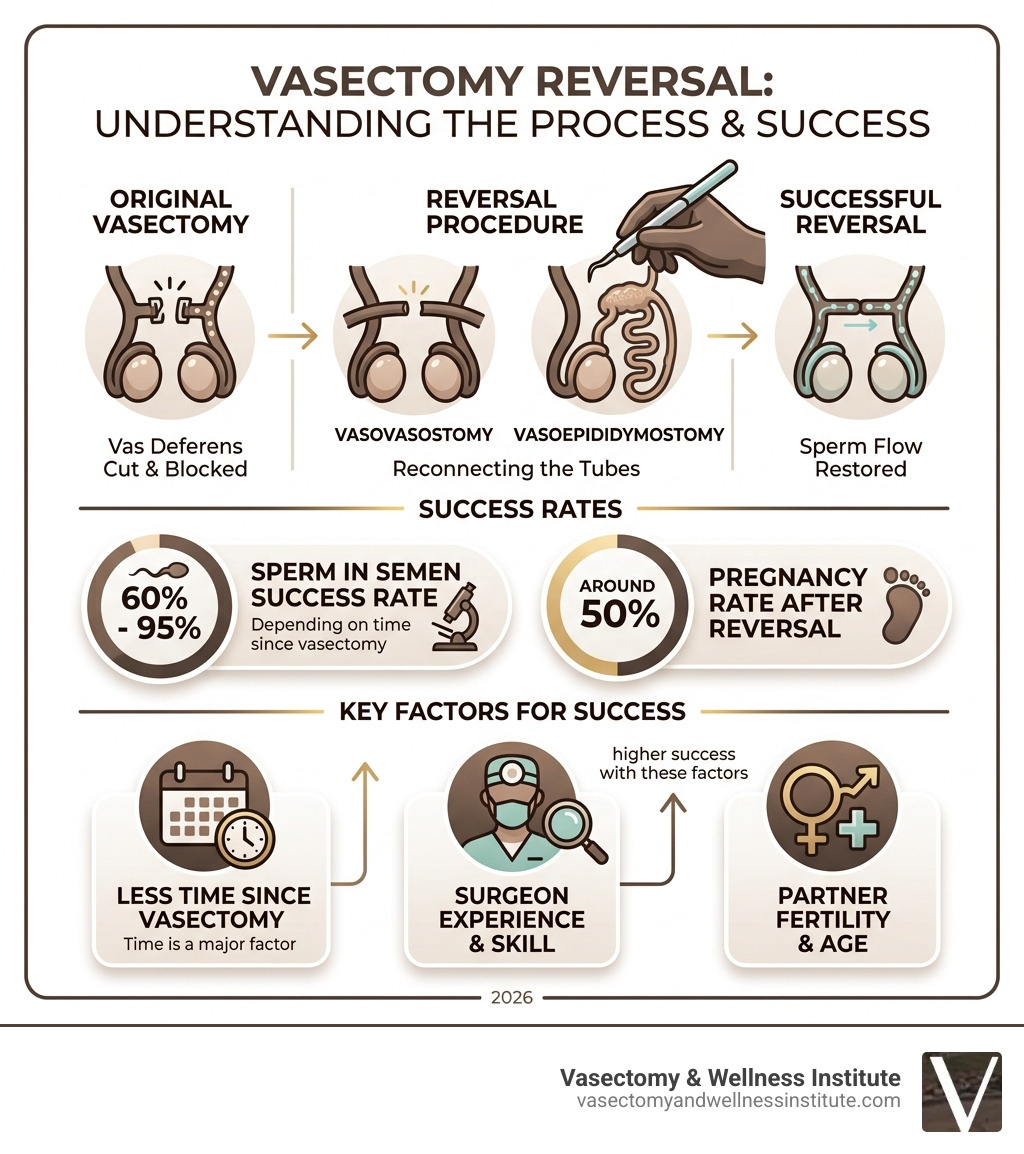
- What it is: A surgical procedure that reconnects the vas deferens (the tubes cut during a vasectomy) to restore sperm flow
- Success rate: 60% to 95% for sperm returning to semen, depending on how long ago the vasectomy was done
- Pregnancy rate: Around 50% of couples achieve pregnancy after reversal
- Time limit: There is no strict time limit — reversals have succeeded even 30+ years after the original procedure
- Procedure type: Either a vasovasostomy (direct reconnection) or vasoepididymostomy (bypass), decided during surgery
That said, results are not guaranteed. Several factors — including how long ago your vasectomy was, your surgeon’s experience, and your partner’s fertility — all play a role in whether reversal leads to pregnancy.
About 6% of men who have a vasectomy later seek a reversal. Life changes — a new relationship, the loss of a child, or simply a change of heart — are among the most common reasons.
I’m Dr. Mustafa Ahmed MD, FACS, FAACS, a board-certified surgeon with experience in minimally invasive and microsurgical procedures, and I’ve helped many patients navigate the question of can vasectomy be reversed with clarity and confidence. In this guide, I’ll walk you through everything you need to make an informed decision.
Understanding the Basics: How Can Vasectomy Be Reversed?
To understand how a reversal works, we first have to look at what happened during your original vasectomy. During that procedure, the vas deferens—the two small tubes that carry sperm from the testicles to the semen—were cut and sealed. This created a biological “roadblock.” While your body continued to produce sperm, they simply had nowhere to go and were reabsorbed by the body.
When we ask, can vasectomy be reversed, we are essentially asking if we can clear that roadblock. The goal of a reversal is to surgically reconnect those severed ends, allowing sperm to once again mix with the seminal fluid. This is a highly delicate process that requires specialized microsurgical techniques.
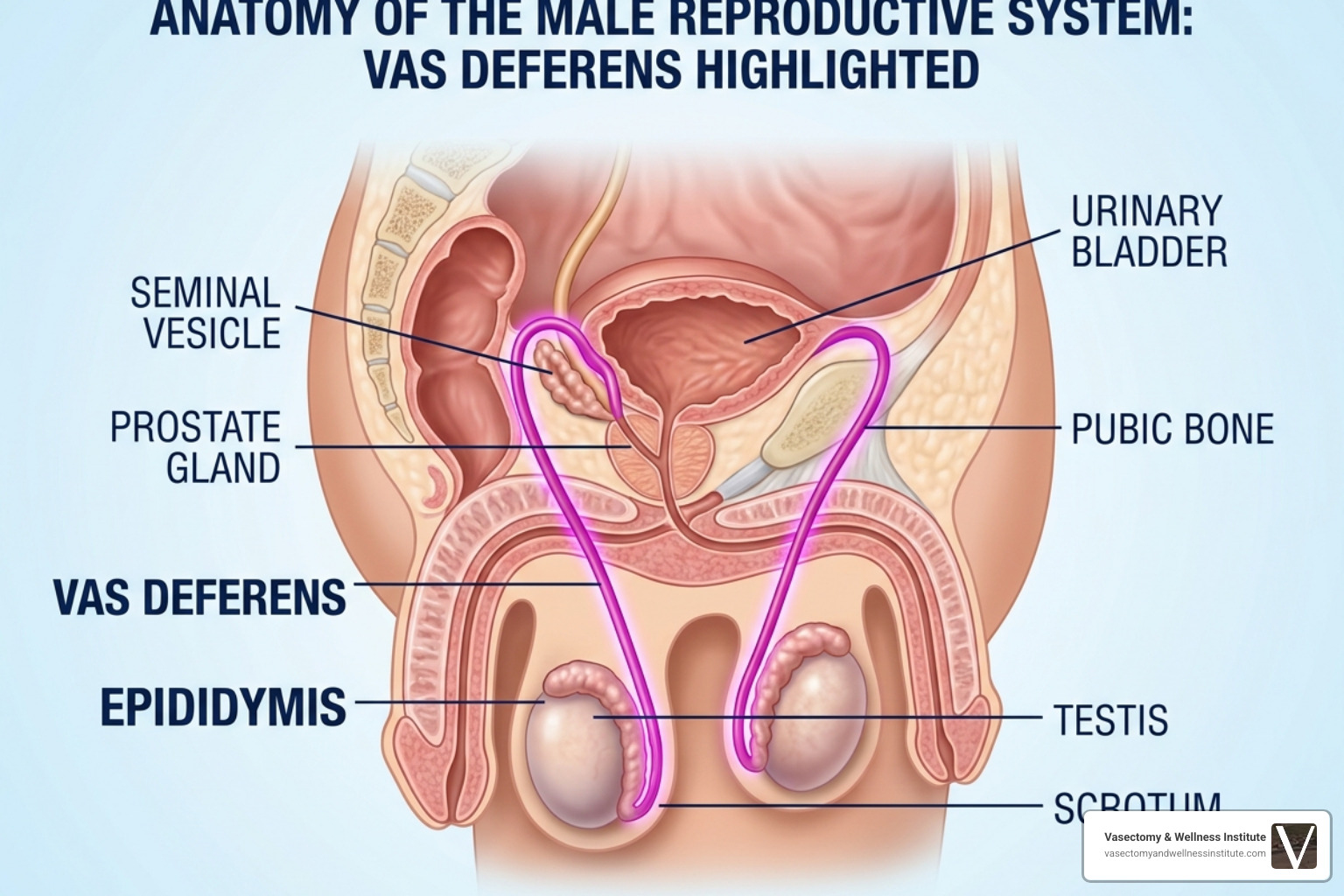
It is important to remember that while a vasectomy is intended to be a permanent form of birth control, the “plumbing” is often still intact and functional. You can learn more about the initial procedure in our Detailed guide to no-scalpel techniques or explore our other Services.
The Science Behind Why a Vasectomy Can Be Reversed
One of the most common myths is that after a vasectomy, the body stops making sperm. This isn’t true! Your testicles continue to produce sperm every single day. They wait in the epididymis—a tightly coiled tube behind each testicle—to mature.
Because sperm production doesn’t shut down, the biological “machinery” remains ready. The reversal procedure focuses on achieving “patency,” which is the medical term for an open, unobstructed pathway. If we can successfully reconnect the tubes and ensure sperm can flow through them, fertility can often be restored. For a deeper dive into the biological aspects, you can read more at Vasectomy reversal: What you should know.
Choosing a Microsurgeon for Your Procedure
If you are considering this path, the skill of your surgeon is perhaps the most critical factor. Reconnecting the vas deferens is not like tying a shoelace; it involves using sutures that are thinner than a human hair.
Experienced microsurgeons use high-powered optical magnification (surgical microscopes) to see the tiny layers of the tube. Studies show that when an experienced microsurgeon performs the procedure, success rates for sperm return can reach 80% to 90%. Choosing someone who understands the nuances of these delicate tissues is vital for the best possible outcome.
The Two Main Types of Vasectomy Reversal Procedures
When we get into the operating room, we don’t always know exactly which procedure we will perform until we see the condition of the fluid inside the vas deferens. There are two primary techniques used to restore flow.
Vasovasostomy: The Standard Reconnection
A vasovasostomy is the most common and straightforward type of reversal. If the surgeon finds sperm in the fluid of the vas deferens during the operation, it indicates there are no blockages further “upstream” in the epididymis.
In this case, we simply stitch the two severed ends of the vas deferens back together. This is often done using a multi-layer closure to ensure a watertight seal, which prevents scarring and leaks. This procedure generally has the highest success rates for both sperm return and pregnancy.
Vasoepididymostomy: Bypassing Blockages
Sometimes, the “back-pressure” created by the original vasectomy can cause a tiny blowout or blockage in the epididymis (the delicate tube where sperm mature). If the surgeon checks the fluid during surgery and finds no sperm, a standard vasovasostomy won’t work because the sperm can’t even reach the reconnection point.
In these instances, we perform a vasoepididymostomy. This is a much more complex reconstruction where the vas deferens is attached directly to the epididymis, bypassing the blockage. This requires incredible precision and a high level of surgical expertise. While more challenging, it is a highly effective way to restore fertility when a standard reconnection isn’t possible. You can find a Technical overview of reversal surgery for more details on these methods.
Success Rates and Factors Influencing Fertility
When patients ask, can vasectomy be reversed, they are usually asking two different things: “Will I have sperm in my semen again?” and “Will we be able to have a baby?” These are two different milestones.
| Factor | Vasovasostomy (VV) | Vasoepididymostomy (VE) |
|---|---|---|
| Sperm Return (Patency) | 75% – 95% | 50% – 80% |
| Pregnancy Rate | 50% – 75% | 20% – 40% |
These statistics show that while we are very good at getting sperm back into the “stream,” pregnancy involves more variables than just the surgery itself. For more data, see these Clinical success factors from Mayo Clinic.
How Time Since the Original Procedure Affects Success
The “obstructive interval” — or the amount of time that has passed since your vasectomy — is a major predictor of success. Generally, the sooner the reversal is done, the better the odds.
- Under 3 years: Pregnancy rates can be as high as 76%.
- 3 to 8 years: Success remains very strong.
- 10 to 15 years: Success rates begin to decline, often because the likelihood of needing a complex vasoepididymostomy increases.
- Over 15 years: While pregnancy rates may drop to around 30%, many men still successfully father children decades later.
Why Partner Health Matters When a Vasectomy Can Be Reversed
Fertility is a team effort. Before undergoing surgery, it is highly recommended that the female partner’s reproductive health be evaluated. Factors like the partner’s age and ovulation health significantly impact the chances of natural conception post-surgery. If a partner is over 40, it is important to discuss the overall reproductive timeline with your healthcare provider to ensure a reversal aligns with your family planning goals.
What to Expect: The Procedure and Recovery Timeline
A vasectomy reversal is a more involved procedure than the original vasectomy. While a vasectomy might take 20 minutes in an office setting, a reversal typically takes between 2 to 4 hours and is performed in an outpatient surgical center under general anesthesia to ensure the patient remains perfectly still for the microsurgery.
The Day of Surgery and Immediate Aftercare
Once the surgery is complete, you will spend a short time in recovery before being discharged to go home. You will need someone to drive you.
- Pain Management: Most men report moderate discomfort, similar to or slightly more than the original vasectomy. This is usually managed with ice packs and over-the-counter pain relievers.
- Scrotal Support: Wearing an athletic supporter (jockstrap) is essential for several weeks to minimize swelling and protect the delicate stitches.
- Rest: Plan to stay off your feet for the first 48 hours.
For more details on what to expect, check our A comprehensive guide to recovery times.
Long-term Healing and Sperm Return
Recovery is a marathon, not a sprint. To protect the microscopic sutures (which are finer than hair), you must follow strict activity restrictions:
- 2-3 Weeks: No heavy lifting, jogging, or strenuous exercise.
- 3-4 Weeks: No sexual intercourse or ejaculation.
- 6-8 Weeks: This is usually when the first semen analysis is performed to check for the presence of sperm.
It can take anywhere from a few months to over a year for sperm counts to stabilize, especially if a vasoepididymostomy was performed. You can find more tips in our Detailed guide to vasectomy recovery.
Alternatives and Considerations Before Surgery
While the question can vasectomy be reversed is answerable with a “yes,” it is important to consider your family planning goals. A reversal is a primary path for those wishing to restore natural fertility. This procedure allows for the possibility of natural conception and the potential for multiple pregnancies in the future without further medical intervention. If you have more questions, our FAQs page covers many common fertility concerns.
Deciding if a Vasectomy Can Be Reversed for Your Situation
The decision to seek a reversal is deeply personal. Whether it is due to a new marriage, the desire for more children, or even to treat rare cases of Post-Vasectomy Pain Syndrome (where a reversal can provide relief for over 80% of sufferers), it is important to have realistic expectations. We are here to help you weigh these goals against the clinical realities of the procedure.
Frequently Asked Questions
How soon after the procedure can a vasectomy be reversed?
Technically, a reversal can be performed at any time after a vasectomy. However, because a vasectomy is intended to be permanent, we usually encourage patients to be absolutely certain of their decision before moving forward with either procedure.
Is the reversal procedure more painful than the original vasectomy?
Most patients describe the pain as moderate. Because it involves a larger incision and more time under anesthesia, the recovery is more intensive than a standard vasectomy. However, with proper icing and rest, most men manage the discomfort well with standard pain medication.
Can a vasectomy be reversed after 20 years or more?
Yes! There is no “expiration date” on your ability to produce sperm. While the surgery may be more complex (likely requiring a vasoepididymostomy) and the pregnancy rates are lower than a “fresh” vasectomy, successful reversals have been documented 30 years or more after the original surgery.
Conclusion
At the Vasectomy & Wellness Institute in Henderson, Nevada, we understand that life doesn’t always go according to the original plan. If you are asking can vasectomy be reversed, you are likely looking for a fresh start. Whether you are seeking fertility restoration or relief from post-vasectomy pain, our team is dedicated to providing expert urological care with a focus on minimally invasive techniques and patient comfort.
Restoring your fertility is a significant step, and we are here to provide the clarity and surgical expertise you need. If you’re ready to discuss your options and see if a reversal is right for you, we invite you to Schedule a consultation for our services today. Together, we can explore the best path forward for you and your family.