

Why So Few Birth Control Options Exist for Men — And What’s Changing
Birth control for men has, for decades, come down to just two choices: condoms or a vasectomy. That’s it. While women have access to more than 20 FDA-approved contraceptive categories — pills, patches, implants, IUDs, injections — men have been largely left on the sidelines of family planning.
The numbers make this gap hard to ignore:
- Nearly 44% of pregnancies worldwide are unplanned, totaling close to 100 million each year
- Condoms have a typical-use failure rate of around 16%
- The withdrawal method works only 78% of the time
- Over 500,000 vasectomies are performed in the U.S. every year — a sign that men are looking for reliable options
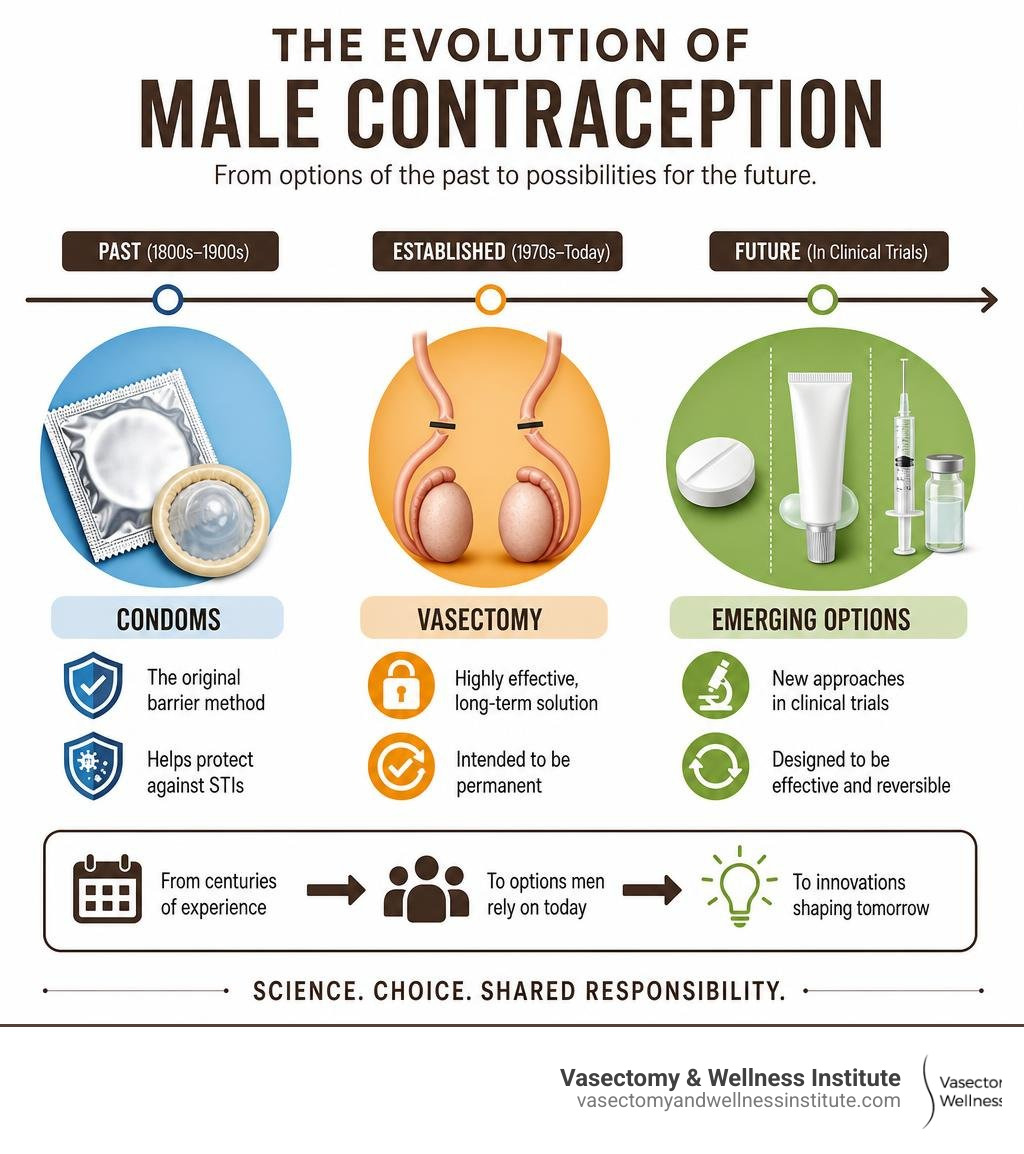
Here’s a quick overview of what’s currently available and what’s coming:
| Method | Available Now? | Effectiveness (Typical Use) | Reversible? | STI Protection? |
|---|---|---|---|---|
| Condoms | Yes | ~84% | N/A | Yes |
| Vasectomy | Yes | >99% | Rarely | No |
| Spermicide | Yes | ~70% | N/A | No |
| Withdrawal | Yes | ~78% | N/A | No |
| YCT-529 (pill) | In trials | TBD | Expected yes | No |
| NES/T gel | In trials | TBD | Yes | No |
| ADAM hydrogel | In trials | TBD | Yes | No |
That landscape is starting to shift. A new generation of male contraceptives — including a hormone-free daily pill, a shoulder-applied gel, and an injectable hydrogel — is moving through clinical trials. The science is catching up, and so is public interest: a 2024 multinational study found that 61% of men were open to trying new male contraceptive methods.
This guide breaks down everything you need to know — what works today, what’s on the horizon, and how these options fit into the bigger picture of shared reproductive responsibility.
I’m Dr. Mustafa Ahmed MD, FACS, FAACS, a board-certified surgeon with deep expertise in minimally invasive procedures and men’s health — including birth control for men through surgical and emerging options. My background across internal medicine, surgery, and critical care gives me a grounded, evidence-based perspective on the options covered in this guide.
Currently Available Birth Control for Men

When we look at the options men can use right now, the menu is remarkably short. For decades, the burden of active, daily, or long-term contraception has fallen heavily on women. To make informed decisions as a couple, it helps to understand the practical mechanics, reliability, and limitations of what is currently on the market.
For a deeper dive into how guys should navigate these choices, check out The Modern Guide to Contraception for Guys.
1. External Condoms
Condoms remain the most popular temporary form of birth control for men. They work by creating a physical barrier that prevents semen from entering the partner’s reproductive tract.
- Effectiveness: Under perfect laboratory use, condoms are 98% effective. However, in the real world, the typical-use failure rate is approximately 16%. This gap is usually due to incorrect sizing, improper storage, late application, or breakage.
- STI Protection: Condoms are the only male contraceptive method that protects against both unplanned pregnancy and sexually transmitted infections (STIs), including HIV, chlamydia, and gonorrhea.
- Best Practices: Always check the expiration date, use water- or silicone-based lubricants (oil-based lubes can degrade latex), and leave space at the tip to collect semen.
2. Vasectomy
A vasectomy is a highly effective, safe, and simple outpatient procedure designed to provide permanent sterilization. During the procedure, the vas deferens—the small tubes that carry sperm from the testes to the urethra—are cut, tied, or sealed.
- Effectiveness: A vasectomy is the gold standard of male contraception, boasting an effectiveness rate of over 99.9%.
- The Recovery and Timeline: The procedure itself is quick, but it does not provide instant sterilization. Sperm can survive in the upper tubes for months. Couples must use backup birth control until a follow-up semen analysis confirms a zero sperm count—typically after 12 weeks or 20 to 30 ejaculations.
- Reversibility: While vasectomy reversals exist, they are complex surgeries and do not guarantee a return of fertility. Anyone considering this option should view it as a permanent decision.
To learn more about what makes a method permanent and whether it is right for you, read No More Babies: What is a Permanent Birth Control Method?.
3. Spermicides
Spermicides are chemical barrier methods, often containing nonoxynol-9, designed to immobilize or destroy sperm before they can reach the egg.
- Effectiveness: When used alone, spermicides are only about 70% to 80% effective. Because of this high failure rate, they should never be relied upon as a primary standalone method.
- Best Practices: Spermicides must be inserted deep into the vagina close to the cervix before intercourse, following the manufacturer’s specific wait-time instructions. They are best used to supplement other barrier methods like condoms. Spermicides do not prevent STIs and can sometimes cause localized irritation.
4. The Withdrawal Method (Pulling Out)
One of the oldest practices in human history, the withdrawal method involves pulling the penis out of the vagina before ejaculation occurs.
- Effectiveness: This method works only about 78% of the time under typical conditions, meaning 22 out of 100 couples relying on it will face an unplanned pregnancy in a given year.
- Why It Fails: It requires extreme self-control and perfect timing. Additionally, pre-ejaculatory fluid (pre-cum) can sometimes carry active sperm, particularly if a man has ejaculated recently. It offers absolutely zero protection against STIs.
Emerging Male Contraceptives and Scientific Mechanisms

The historical lack of funding, strict regulatory pathways, and the biological complexity of stopping millions of sperm (compared to a single monthly egg in women) have kept new male options off the market for over 60 years. However, clinical pipelines are now filled with highly promising candidates.
Researchers are currently investigating both hormonal and non-hormonal pathways to achieve reversible sperm suppression. According to research highlights from the University of Minnesota, we are closer than ever to a breakthrough that could redefine family planning.
How New Non-Hormonal Birth Control for Men Works
For men who want to avoid the potential mood swings, acne, or weight changes sometimes associated with hormonal therapies, non-hormonal options are the holy grail. The frontrunner in this category is an experimental drug called YCT-529.
The Mechanism of YCT-529
YCT-529 is a non-hormonal oral contraceptive that works by targeting the retinoic acid receptor alpha (RAR-α). Vitamin A derivatives (retinoic acid) are absolutely essential for spermatogenesis—the process of sperm cell development in the testes. By blocking this specific receptor, YCT-529 prevents the gene-expression changes required for sperm to mature. It effectively turns off the sperm production assembly line without altering the body’s natural sex hormones.
Preclinical and Early Clinical Success
- Animal Studies: In male mice, YCT-529 was 99% effective in preventing pregnancies within four weeks of use. In non-human primates, sperm counts dropped sharply within just two weeks of administration.
- Reversibility: Preclinical trials showed excellent reversibility. Mice fully regained their fertility within 4 to 6 weeks of stopping the drug, while primates recovered their normal sperm counts within 10 to 15 weeks.
- Human Safety Trials: A Phase 1a clinical trial, published in Nature Communications Medicine, tested single oral doses of YCT-529 (ranging from 10 mg to 180 mg) in 16 healthy, post-vasectomy male volunteers. The study confirmed that the drug was safe, well-tolerated, and had no adverse effects on heart rate, laboratory values, or hormone levels.
- Dosing Potential: The drug boasts a long half-life of 51 to 76 hours. This suggests that future formulations might not even require daily adherence; a promising new male birth control pill could potentially be taken every three days.
Hormonal and Physical Barrier Birth Control for Men in Clinical Trials
Beyond non-hormonal pills, scientists are developing gels and injectable physical barriers that offer long-acting, reversible protection.
1. NES/T Gel (Hormonal Approach)
NES/T is a daily, transdermal gel applied to the shoulders. It contains a combination of Nestorone (a progestin) and testosterone.
- How it works: The progestin shuts down the signals from the brain (LH and FSH) that tell the testes to produce sperm and testosterone. Because this also drops the body’s natural testosterone levels, the gel includes replacement testosterone to maintain a normal sex drive, muscle mass, and energy levels.
- Timeline: It takes about 4 to 12 weeks of daily application to lower sperm counts to safe levels (less than 1 million per milliliter). Normal sperm production fully resumes within six months of stopping the gel.
2. ADAM Hydrogel (Physical Barrier)
For men who like the “set-it-and-forget-it” convenience of a vasectomy but want guaranteed reversibility, ADAM hydrogel is an exciting development.
- How it works: It is a synthetic hydrogel injected into the vas deferens using a minimally invasive, no-scalpel approach. The gel acts as an internal plug, blocking sperm from passing through while allowing other seminal fluids to flow. Over time, the hydrogel naturally dissolves, restoring sperm flow and fertility.
3. RISUG (Reversible Inhibition of Sperm Under Guidance)
RISUG is an injectable polymer gel (styrene maleic anhydride) placed into the vas deferens.
- How it works: It physically blocks sperm and chemically damages their cell membranes, rendering them incapable of fertilizing an egg. A Phase 3 clinical analysis reported a method failure rate of just 2.7%, showcasing its potential as a highly reliable, long-term, reversible alternative to traditional sterilization.
To explore how these clinical innovations compare to existing gynecological options, you can read about general birth control methods on platforms like GoodRx.
Societal Impact, Regulatory Hurdles, and Shared Responsibility
Expanding the menu of birth control for men is about more than just biology; it has the potential to reshape gender equity, partner communication, and reproductive autonomy.
Sharing the Responsibility
Historically, women have carried the physical, emotional, and systemic burdens of contraception. When a male partner actively participates in birth control, it fosters a healthier, more collaborative dynamic. Research shows that 50% to 85% of women trust their male partners to use contraceptives responsibly.
For couples navigating these conversations, establishing a shared plan is key. You can find guidance on how to approach these discussions in our resource on A Joint Decision: Navigating the Vasectomy Consultation Together.
Regulatory and Commercial Challenges
Despite high consumer demand, bringing a new male contraceptive to market is incredibly difficult.
- The FDA Safety Bar: The FDA maintains a near-perfect safety standard for male contraceptives. Because a male user faces no direct physical health risks from a partner’s pregnancy, regulators argue that the drug must carry virtually zero side effects. In contrast, female contraceptives were approved decades ago when the clinical risks of pregnancy were weighed directly against the side effects of the pill.
- Pharmaceutical Investment: Many large pharmaceutical companies stepped away from male contraceptive research in the mid-2000s due to perceived regulatory risks and outdated assumptions about user interest. Today, much of the progress is driven by non-profit organizations, academic institutions, and specialized biotech firms.
To understand how these shifting dynamics are influencing modern urology, read the industry perspective on Renal & Urology News.
Frequently Asked Questions About Male Contraception
What is the most effective male birth control option currently available?
A vasectomy is by far the most effective option available today, with a success rate of over 99.9%. While condoms are highly effective in theory (98%), their real-world typical-use effectiveness drops to around 84% due to human error.
Are there any non-hormonal male birth control pills in human trials?
Yes. YCT-529 is the first hormone-free, orally administered male birth control pill to successfully clear early human safety trials (Phase 1a). It works by blocking a vitamin A receptor (RAR-α) to stop sperm production without affecting testosterone or other sex hormones.
Does a vasectomy immediately prevent pregnancy?
No. After a vasectomy, active sperm remain stored in the upper sections of the vas deferens. You must use a backup birth control method until you complete a follow-up semen analysis (usually 12 weeks post-procedure) and receive clinical clearance confirming a zero sperm count.
Conclusion
The future of birth control for men is incredibly bright. With non-hormonal pills like YCT-529, daily gels, and dissolving hydrogels progressing through clinical trials, the days of having only two options are coming to an end.
However, if you are looking for a permanent, worry-free solution today, a vasectomy remains the gold standard. At the Vasectomy & Wellness Institute in Henderson, Nevada, we specialize in state-of-the-art, no-needle, no-scalpel vasectomies. Our advanced, minimally invasive approach is designed to be quick, virtually painless, and highly convenient, allowing you to get back to your normal routine rapidly.
Ready to take control of your reproductive health and support your partner? Explore our services and schedule your consultation with us today.