

What Is a No-Scalpel Vasectomy? Your Quick-Answer Guide
No scalpel vasectomy wiki searches typically want one thing: a clear, fast explanation of what this procedure actually is. Here it is:
No-Scalpel Vasectomy (NSV) — Quick Definition
| Feature | Details |
|---|---|
| Also called | Keyhole vasectomy, non-scalpel vasectomy, NSV |
| What it is | A minimally invasive permanent male contraception procedure |
| How it works | A small puncture (not a cut) accesses the vas deferens to block sperm flow |
| Key instruments | Ringed clamp + dissecting hemostat |
| Anesthesia | Local (lidocaine), often needle-free |
| Procedure time | 10–30 minutes, outpatient |
| Stitches needed? | No |
| Vs. traditional vasectomy | Same effectiveness, but less bleeding, pain, infection risk, and faster recovery |
| Failure rate | ~0.1% with proper occlusion technique |
In short: NSV is a faster, less invasive way to achieve permanent birth control — without a scalpel, often without a needle, and usually without missing more than a day or two of normal life.
It was developed in China in 1974 by Dr. Li Shunqiang and has since become the gold standard for vasectomy in over 40 countries. A landmark randomized controlled trial found NSV had a complication rate of just 0.4 per 100 procedures, compared to 3.1 per 100 for conventional vasectomy.
I’m Dr. Mustafa Ahmed MD, FACS, FAACS, a board-certified surgeon with experience in minimally invasive surgical techniques — the same principles that make NSV one of the safest and most effective procedures in outpatient medicine. In this guide, I’ll walk you through everything the no scalpel vasectomy wiki resources cover, plus the clinical details that actually matter when you’re making this decision.
Understanding the No-Scalpel Vasectomy Wiki Definition
When we talk about a no scalpel vasectomy wiki definition, we are referring to a specific surgical approach designed to minimize trauma to the scrotal tissue. Unlike the traditional method, which requires one or two incisions made with a surgical blade (scalpel), NSV uses a “puncture” technique.
The history of this procedure is fascinating. It was invented by Dr. Li Shunqiang in China in 1974 to help men overcome the “fear of the knife,” which was a significant barrier to the adoption of male sterilization. By the mid-1980s, it reached the United States and has since been refined into the ultra-efficient procedure we perform today.
At its core, NSV is about access. We use a specialized “three-finger” technique to isolate the vas deferens—the tubes that carry sperm—under the skin. Once isolated, we don’t cut the skin; we use a tiny puncture that is then stretched just enough to allow the vas to be gently lifted out, blocked, and tucked back in. Because the opening is so small (usually only 2-3 millimeters), it seals itself naturally without the need for stitches. If you are curious about how this fits into your budget, check out our Detailed Guide to Vasectomy Cost.
Essential Tools Found in a No-Scalpel Vasectomy Wiki
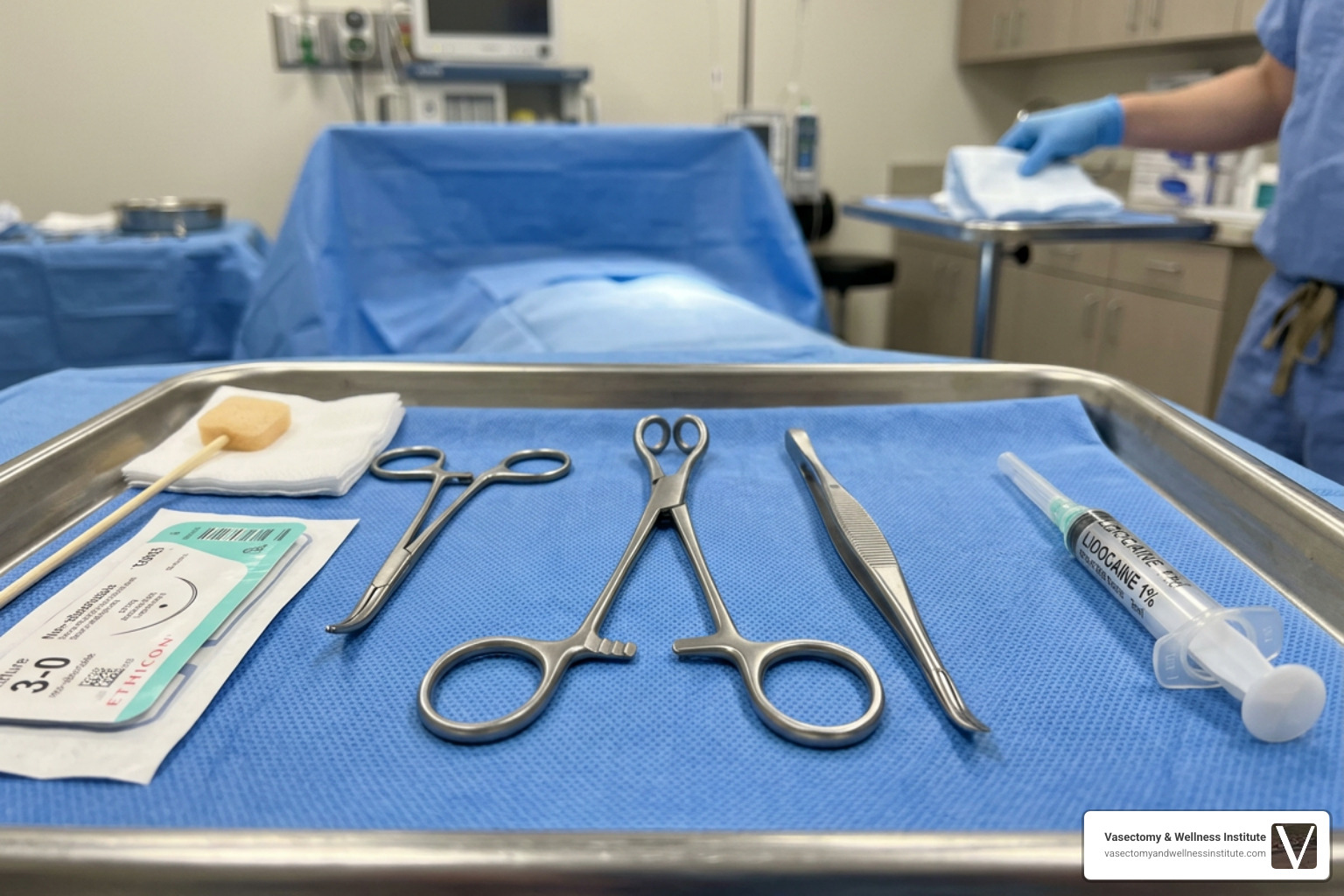
The magic of NSV lies in two very specific instruments that replaced the scalpel and traditional forceps. If you were to look at a medical no scalpel vasectomy wiki, you would see these listed as the “Li” instruments:
- The Vas Ring Clamp: This looks a bit like a pair of scissors with a small, circular ring at the tip. We use this to encircle and firmly hold the vas deferens through the skin of the scrotum.
- The Dissecting Forceps (Hemostat): These have very sharp, pointed tips. Instead of cutting, these tips are used to puncture the skin and then spread the tissue apart. This “spreading” action is much kinder to blood vessels and nerves than a sharp blade, which is why there is so much less bruising and pain.
These tools allow us to offer a range of Services that prioritize your comfort and long-term wellness.
How NSV Differs from Conventional Methods
The primary difference is the “entry” strategy. In a conventional vasectomy, the surgeon makes a 1 to 2 cm incision. This cut slices through skin, muscle layers, and small blood vessels, which often leads to more bleeding and a higher risk of hematoma (a collection of blood inside the scrotum).
In contrast, the NSV puncture method results in:
- Significantly less bleeding: Because we spread the tissue rather than cutting it.
- Reduced infection risk: A smaller opening that closes on its own is less likely to let bacteria in.
- No stitches: This means no itchy sutures to worry about and no follow-up visit just to have them removed.
- Faster recovery: Most of our patients find they can return to desk work in just a couple of days.
For those who love the data, this Scalpel vs. no-scalpel clinical review provides a deep dive into why the no-scalpel method is clinically superior.
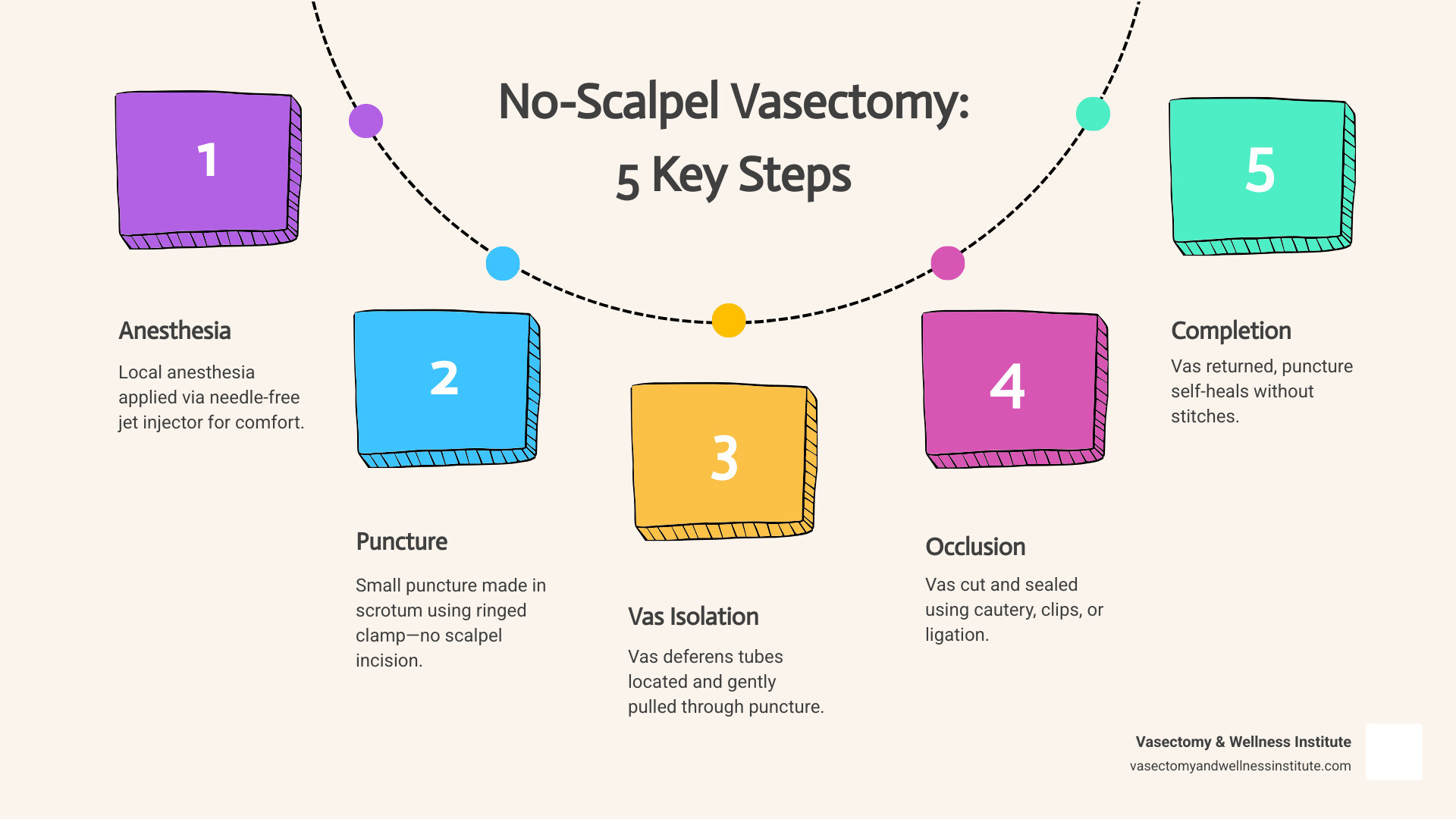
The Procedure: From Anesthesia to Occlusion
We know that the idea of a procedure in “that area” can be nerve-wracking. That’s why we’ve optimized every second of the 15-to-20-minute process. It starts with positioning—we use a gentle retraction method to ensure the area is accessible and stable. Then comes the part most men worry about: the numbing.
No-Needle Anesthesia Techniques
One of our most popular advancements is the no-needle anesthesia technique. Many men have a genuine phobia of needles, and we believe that shouldn’t stand in the way of permanent birth control.
Instead of a traditional syringe, we use a high-pressure jet injector (often called a MadaJet). It uses air pressure to spray a fine mist of lidocaine directly through the skin. It feels like a tiny rubber band flick or a quick “puff” of air. The numbing happens almost instantly. Once the skin and the area around the vas deferens are numb, you shouldn’t feel any sharp pain—just some mild tugging or pressure. You can read more about the Scientific research on no-needle jet anesthesia to see how it stacks up against traditional shots. If you have more questions about the numbing process, our FAQs page is a great resource.
Comparing Techniques via the No-Scalpel Vasectomy Wiki
Once we have access to the vas deferens, we have to block them. This is called “occlusion.” There are several ways to do this, and the American Urological Association (AUA) has clear guidelines on which ones work best.
- Thermal Cautery: We use a small amount of heat to seal the inside of the tube (the lumen). This creates a scar tissue plug that is incredibly effective.
- Fascial Interposition (FI): This is a fancy term for pulling a small layer of the surrounding tissue (the fascia) over one end of the cut tube and sewing or clipping it shut. It creates a physical “wall” between the two ends, making it nearly impossible for them to grow back together.
- Open-Ended Vasectomy: In this version, we seal the end of the tube leading to the penis (the prostatic end) but leave the end leading from the testicle (the testicular end) open. This can help reduce that “pressure” feeling some men get after surgery, as sperm can leak into a small, harmless area and be reabsorbed by the body.
- Ligation and Excision: This is the old-school method of tying the tubes with thread and cutting a section out. While still used, it has a slightly higher failure rate if not combined with cautery or FI.
We typically recommend a combination of cautery and fascial interposition because it offers the lowest failure rates in the medical literature.
Benefits and Clinical Outcomes of NSV
The data is clear: NSV is the winner for patient satisfaction. A study of over 1,200 men found that the complication rate for NSV was 0.4%, while the conventional method was nearly eight times higher at 3.1%.
| Outcome | No-Scalpel (NSV) | Conventional |
|---|---|---|
| Hematoma Rate | ~0.3% | ~12.2% |
| Infection Rate | Very Low (<1%) | Higher (~2-4%) |
| Pain During Procedure | Minimal | Moderate |
| Recovery Time | 2–3 days | 5–7 days |
Men who choose NSV also report a much faster resumption of sexual activity. Most are back to their normal routine within a week. For a detailed breakdown of what to expect day-by-day, see A Comprehensive Guide to Vasectomy Recovery Times.
Recovery and Postoperative Care
Recovery from an NSV is usually straightforward, but “minimal” doesn’t mean “zero.” We tell our patients in Henderson that the first 48 hours are the most important.
- The “Bag of Peas” Method: Ice is your best friend. Apply an ice pack (or a bag of frozen peas) to the area for 20 minutes on, 20 minutes off for the first two days. This keeps swelling down.
- Supportive Underwear: Leave the boxers in the drawer for a few days. Tight-fitting underwear or a jockstrap provides the support your “boys” need to heal without being tugged by gravity.
- Take it Easy: No heavy lifting, gym sessions, or “vigorous activity” for about a week. If your job involves a desk, you’re usually fine to head back in 48 hours.
- Pain Management: Most men find that over-the-counter Ibuprofen or Tylenol is more than enough to handle the residual soreness, which usually feels like a dull ache.
For more tips on a smooth transition back to your daily life, visit our Detailed Guide to Vasectomy Recovery.
Success Rates and Long-Term Safety
Is it effective? Yes. Vasectomy is more effective than the pill, condoms, and even tubal ligation (getting “tubes tied”). The typical failure rate is about 1 in 2,000 after you’ve been cleared by a lab.
The PVSA Protocol (Post-Vasectomy Semen Analysis)
This is the most important part of the process: You are not sterile the moment you leave our office. There is still “sperm in the pipes” above the site where we blocked the tubes. It takes about 10 to 20 ejaculations (or roughly 3 months) to clear out the remaining sperm.
We follow a strict protocol to ensure you are safe:
- Wait: We usually schedule your first test about 12 weeks after the procedure.
- Test: You’ll provide a sample to a lab.
- Confirmation: We look for “azoospermia” (zero sperm) or a very low number of non-motile (dead) sperm.
- Clearance: Only after we give you the official “all clear” can you stop using other forms of birth control.
If you’re wondering about the total investment for this lifelong peace of mind, read How Much Does a Vasectomy Cost on Average?
Debunking Myths: Prostate Cancer and Health Risks
There have been many “scare stories” over the decades linking vasectomy to various health issues. However, modern science has thoroughly debunked these.
- Prostate Cancer: Extensive Research on vasectomy and prostate cancer risk involving hundreds of thousands of men has shown no causative link. The AUA guidelines state clearly that clinicians do not even need to discuss prostate cancer as a risk factor because the evidence against a link is so strong.
- Testosterone: A vasectomy does not change your hormone levels. Your testicles continue to produce testosterone just as they did before; the only difference is that the sperm they produce can no longer leave the body.
- Sex Drive: Most men report improved sexual satisfaction because the “pregnancy scare” factor is removed from the equation. Your erections, orgasms, and the amount of fluid you ejaculate will remain exactly the same.
Frequently Asked Questions about NSV
Is the procedure reversible?
Yes, it is possible to reverse a vasectomy through a microsurgical procedure called a vasovasostomy. However, it is expensive, often not covered by insurance, and success is not guaranteed—especially if many years have passed. We always advise our patients to view a vasectomy as a permanent decision.
How soon can I resume sexual activity?
Most men can resume sex after about 7 days. The main rule is to wait until you feel comfortable and the puncture site has fully healed. Remember: You must use backup contraception until your semen analysis confirms you are clear.
What is the failure rate of NSV?
The failure rate is exceptionally low, around 0.1% to 0.15% in the first year. Most “failures” happen because a couple has unprotected sex before the “all clear” is given, or in very rare cases (about 1 in 2,000), the tubes naturally grow back together (recanalization).
Conclusion
At the Vasectomy & Wellness Institute in Henderson, Nevada, we believe that taking control of your reproductive health shouldn’t be a painful or scary experience. By utilizing the no scalpel vasectomy wiki gold-standard techniques—combined with no-needle anesthesia—we provide a service that is as efficient as it is comfortable.
If you live in Henderson, Las Vegas, or the surrounding areas, we invite you to experience the difference that expert, minimally invasive care can make. From your initial consultation to your final “all clear,” our team is dedicated to your wellness.
Ready to take the next step? Explore our Affordable Vasectomy Options for Henderson and Las Vegas Residents or book your consultation directly through our Services page. No knife, no stitches, no problem.