

What the Open-Ended Vasectomy Procedure Really Means for You
The open-ended vasectomy procedure is a modern approach to permanent male contraception that leaves the testicular end of the vas deferens unsealed — reducing pressure buildup, lowering the risk of chronic pain, and making reversal easier if your plans ever change.
Here’s a quick summary of what sets it apart:
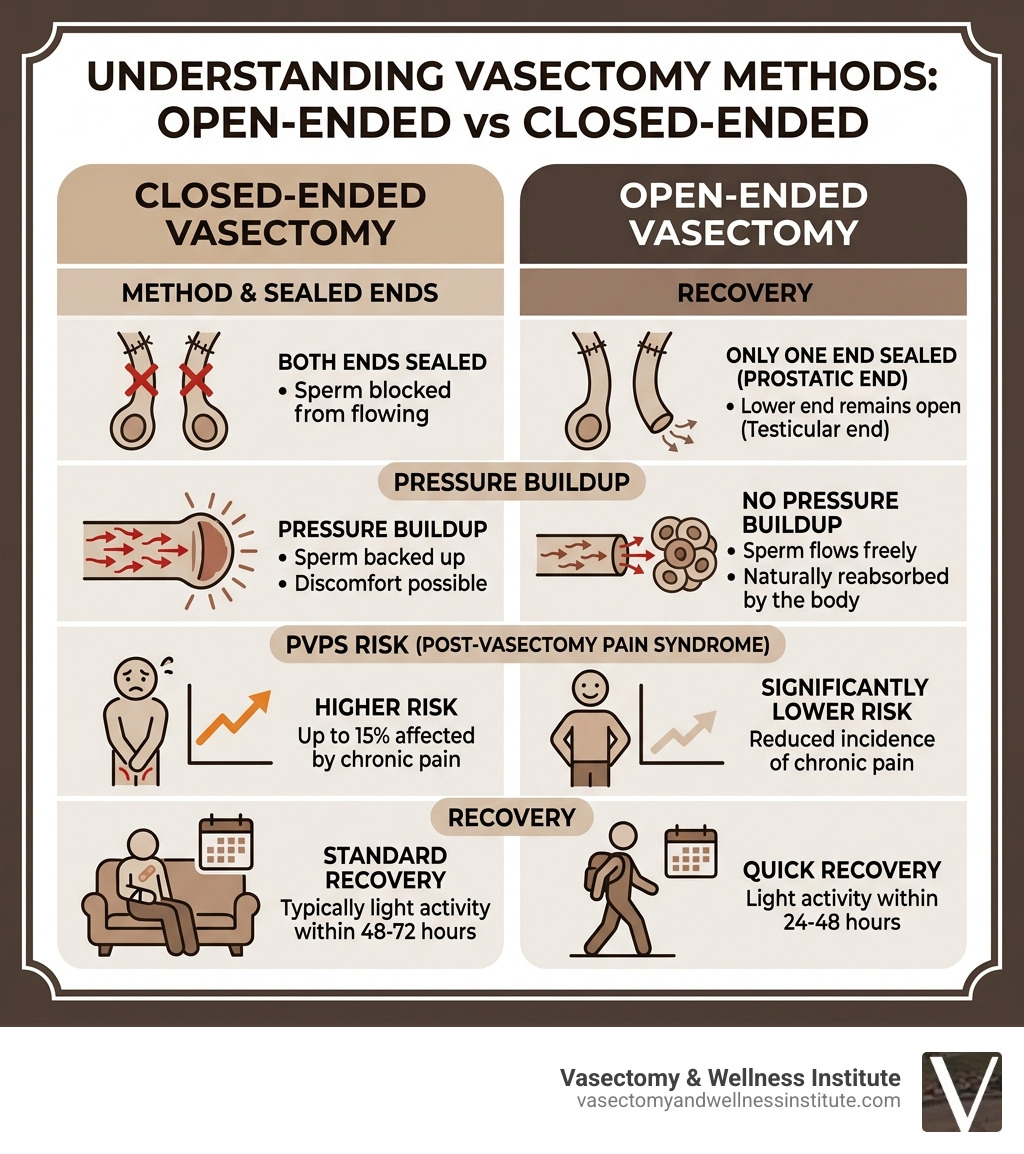
- What it is: A vasectomy where only the upper (prostatic) end of the vas deferens is sealed. The lower (testicular) end stays open.
- How it works: Sperm continues to flow out of the open end and is naturally reabsorbed by the body, preventing painful pressure from building up.
- Key benefit: Significantly lower risk of post-vasectomy pain syndrome (PVPS) — which affects up to 15% of men who have a traditional closed-ended vasectomy.
- Effectiveness: Just as reliable as closed-ended vasectomy, with a spontaneous recanalization (failure) rate as low as 0.02% when performed correctly.
- Procedure time: As little as 15 minutes when combined with no-scalpel, no-needle techniques.
- Recovery: Most men return to light activity within 24–48 hours.
For men in their 30s and 40s looking for a permanent, low-risk, minimally invasive birth control solution, this approach checks nearly every box.
I’m Dr. Mustafa Ahmed MD, FACS, FAACS, a board-certified surgeon with expertise in minimally invasive procedures — the same principles of precision and minimal tissue disruption that define the open-ended vasectomy procedure are central to my surgical practice. In this guide, I’ll walk you through everything you need to know to make a confident, informed decision.
Understanding the Open-Ended Vasectomy Procedure
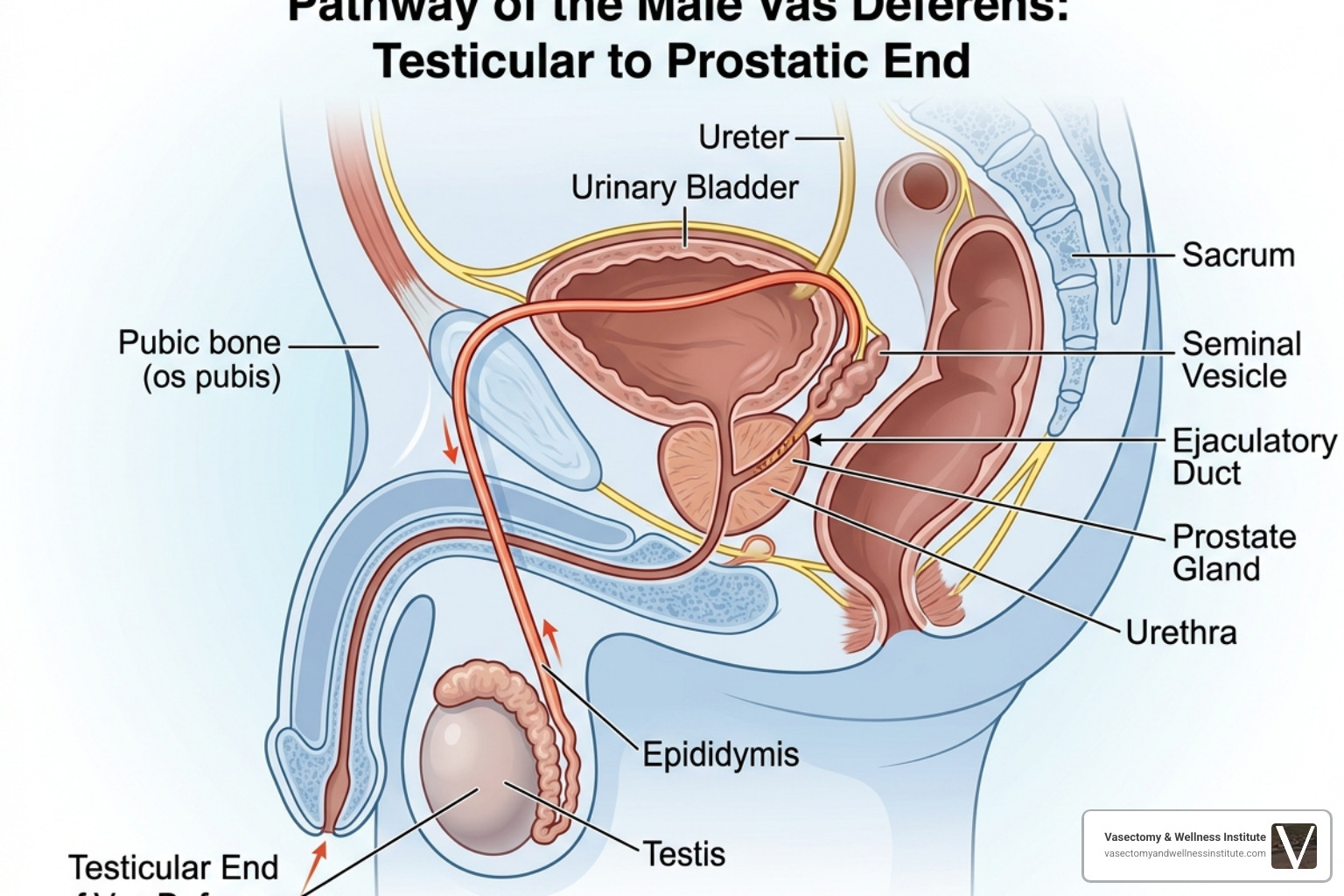
To understand why the open-ended vasectomy procedure is gaining so much traction in 2026, we first have to look at the anatomy. Every man has two tubes called the vas deferens. Their job is to carry sperm from the testicles (the “testicular end”) up toward the prostate (the “prostatic end”) to mix with semen.
In a traditional vasectomy, both of these ends are sealed tight. Think of it like putting a cap on both ends of a garden hose while the faucet is still running. Eventually, that pressure has to go somewhere. In many men, this leads to congestion in the epididymis—the coiled tube behind the testicle where sperm matures.
The open-ended approach changes the “plumbing” logic. We seal the top end (the prostatic end) to ensure no sperm can reach the semen, but we leave the bottom end (the testicular end) open. This allows sperm to leak out into a controlled space within the scrotum where the body’s natural “cleanup crew”—the immune system—reabsorbs it. This prevents the “back-pressure” that often causes post-operative aching.
How it differs from traditional methods
In a closed-ended (traditional) vasectomy, surgeons often use surgical clips, heavy sutures, or aggressive cauterization on both ends of the tube. While this is effective at preventing pregnancy, it creates a closed system.
Research, such as the Scientific assessment of open-ended techniques, shows that this sudden blockage can lead to epididymal congestion. In fact, studies comparing thousands of cases found that epididymal congestion rates were nearly double in closed-ended procedures (2.7%) compared to open-ended ones (1.5%).
| Feature | Open-Ended Vasectomy | Closed-Ended (Traditional) |
|---|---|---|
| Testicular End | Left Open | Sealed (Clipped/Tied) |
| Prostatic End | Sealed & Tucked | Sealed |
| Pressure Buildup | Minimal/None | Significant |
| PVPS Risk | Lower | Higher (up to 15%) |
| Reversal Success | Higher | Lower |
| Failure Rate | ~0.02% | ~0.08% |
The role of fascial interposition
You might be wondering: “If you leave one end open, won’t the tubes just find each other and grow back together?” This is a valid concern, and it’s why we use a technique called fascial interposition.
The vas deferens is surrounded by a thin layer of connective tissue called fascia. During the procedure, we pull a small layer of this tissue over the sealed prostatic end and secure it. This creates a natural physical barrier—like a “wall” between the two ends. This step is what makes the open-ended vasectomy procedure so incredibly reliable. According to the A Comprehensive Guide to Vasectomy Recovery Times, using these advanced occlusion methods ensures that the “failure” or recanalization rate stays exceptionally low.
Key Benefits: Why the Open-Ended Approach is Trending in 2026

In 2026, men are more informed than ever. We don’t just want a procedure that “works”; we want one that doesn’t interfere with our active lifestyles. Whether you’re hiking Red Rock Canyon or hitting the gym in Henderson, you want to ensure your recovery is smooth and your long-term comfort is guaranteed.
Reduced risk of PVPS in an open-ended vasectomy procedure
Post-Vasectomy Pain Syndrome (PVPS) is the “elephant in the room” when discussing traditional vasectomies. It can manifest as a dull ache, pressure, or sharp pain during physical activity or ejaculation. Traditional methods have been linked to PVPS in up to 15% of patients.
The open-ended vasectomy procedure acts as a pressure-relief valve. By allowing sperm to flow out of the testicular end, we prevent the “blowout” effect in the epididymis. Major medical guidelines, including the American Urological Association (AUA), have noted that the open-ended technique can significantly reduce the incidence of congestive pain. Clinical data shows that men who undergo an open-ended procedure have a 93.3% rate of pain reduction or elimination compared to those who experience chronic pain after traditional methods.
Enhanced reversibility of the open-ended vasectomy procedure
Life happens. While we always advise patients to view a vasectomy as permanent, statistics show that about 6-10% of men eventually seek a reversal.
If you ever decide to undergo a vasovasostomy (reversal surgery), having had an open-ended procedure puts you at a distinct advantage. Because there was no high-pressure buildup, the “plumbing” of the epididymis remains healthy and unobstructed. This often results in higher success rates for restoring sperm flow. As detailed in our Detailed Guide to Vasectomy Recovery, preserving the integrity of the testicular end is a proactive move for your future reproductive health.
Step-by-Step: The No-Scalpel and No-Needle Experience
At the Vasectomy & Wellness Institute, we combine the open-ended technique with the most advanced “no-needle, no-scalpel” methods available today. This means the entire experience is designed for comfort, speed, and minimal downtime.
Preparation and anesthesia
The biggest fear most men have is the needle. We’ve eliminated that. Using a device like the MadaJet, we deliver a high-pressure spray of lidocaine—a local anesthetic—directly through the skin. It feels like a tiny rubber band snap.
This “no-needle” approach doesn’t just reduce anxiety; it’s actually more effective. Because there is no needle to cause internal bruising or swelling, the anatomy remains clear, allowing for a more precise procedure. This is a key part of what we discuss during our A Joint Decision: Navigating the Vasectomy Consultation Together sessions, where we help couples understand exactly how painless the process is.
The occlusion process
Once the area is numb, we follow these steps:
- Single Puncture: Instead of using a scalpel to make a large incision, we use a special instrument to make a tiny puncture (about 2-3mm) in the midline of the scrotum.
- Accessing the Vas: Through this tiny opening, we gently lift the vas deferens.
- The Snip: We divide the tube.
- Sealing the Upper End: The end leading to the prostate is cauterized (sealed with heat) and tucked behind the fascia (fascial interposition).
- Leaving the Lower End Open: The testicular end is left completely untreated.
- No Stitches: Because the opening is so small, it heals naturally without the need for stitches. The entire process takes about 15 minutes. For a deeper dive into this method, check out No Knife, No Problem: The Complete Guide to NSV.
Recovery and Effectiveness: What to Expect Post-Procedure
Recovery from an open-ended vasectomy procedure is generally faster and less painful than traditional surgery. Most of our patients in Henderson report feeling “back to normal” within just a few days.
Confirming sterility
It is important to remember that you are not sterile the moment you walk out of our office. Sperm can survive in the upper portion of the tubes for weeks.
- The “Clearance” Rule: You must use alternative birth control until we confirm you have a zero sperm count.
- The Timeline: This typically requires 20 to 30 ejaculations or waiting about 3 months.
- The Success Rate: Once cleared, the procedure is over 99.9% effective.
Our guide on How Long It Really Takes to Heal After Getting Snipped provides a detailed timeline for when it’s safe to resume “unprotected” activity.
Managing minor side effects
While the open-ended technique reduces major complications, you may still experience:
- Mild Swelling: This is normal and usually peaks 24–48 hours after the procedure.
- Bruising: Some “color” in the scrotal area is expected.
- Dull Ache: Acetaminophen (Tylenol) is usually all you need. We advise avoiding ibuprofen or aspirin for the first few days as they can thin the blood.
The best advice we can give? Don’t Be a Hero: Expert Advice for Faster Healing. Use a cold pack for 20 minutes on and 20 minutes off for the first two days, and wear supportive underwear (briefs or a jockstrap) to keep things from moving around too much.
Frequently Asked Questions about Open-Ended Vasectomy
Is the open-ended method as effective as the closed method?
Yes. Some early critics in the 1970s feared that leaving one end open would lead to higher failure rates. However, decades of data and thousands of procedures have proven otherwise. When combined with fascial interposition, the failure rate is actually lower (0.02%) than some traditional closed methods (0.08%). The “barrier” we create is extremely effective at preventing the tubes from reconnecting.
Will leaving the tube open cause a sperm granuloma?
A sperm granuloma is a small, pea-sized lump that forms when sperm leaks from the open end and the body’s immune system surrounds it. While the word “granuloma” sounds scary, it is actually a beneficial part of the open-ended vasectomy procedure. It acts as a natural “recycling center” for sperm and helps prevent pressure from building up in the epididymis. Most men never even feel them, and they are entirely harmless. In fact, research shows that painful granulomas are actually more common in closed-ended vasectomies because the sperm has nowhere to go but to force its way out under high pressure.
Does this procedure affect testosterone or sexual function?
Absolutely not. This is perhaps the most common question we get at the Vasectomy & Wellness Institute. A vasectomy only blocks the transport of sperm; it does not touch the blood vessels or nerves responsible for erections or testosterone production. Your hormones, libido, and the sensation of orgasm will remain exactly the same. You will still ejaculate normally; the only difference is that the fluid will no longer contain microscopic sperm. For more quick answers, visit our FAQs page.
Conclusion
Choosing to get a vasectomy is a significant decision for your family and your future. At the Vasectomy & Wellness Institute in Henderson, Nevada, we believe that if you’re going to do it, you should do it the right way—with the most advanced, comfortable, and physiologically sound method available.
The open-ended vasectomy procedure isn’t just a surgical choice; it’s a commitment to your long-term wellness. By reducing the risk of chronic pain and ensuring a faster, easier recovery, we help you get back to your life without the “baggage” of traditional surgery.
If you’re ready to take the next step toward permanent, worry-free contraception, we invite you to explore our Services and schedule a consultation with our expert team. Let’s make your “best move” together.