

What to Expect From a Quick Recovery Vasectomy
A quick recovery vasectomy is more achievable than most men expect — especially with modern, minimally invasive techniques.
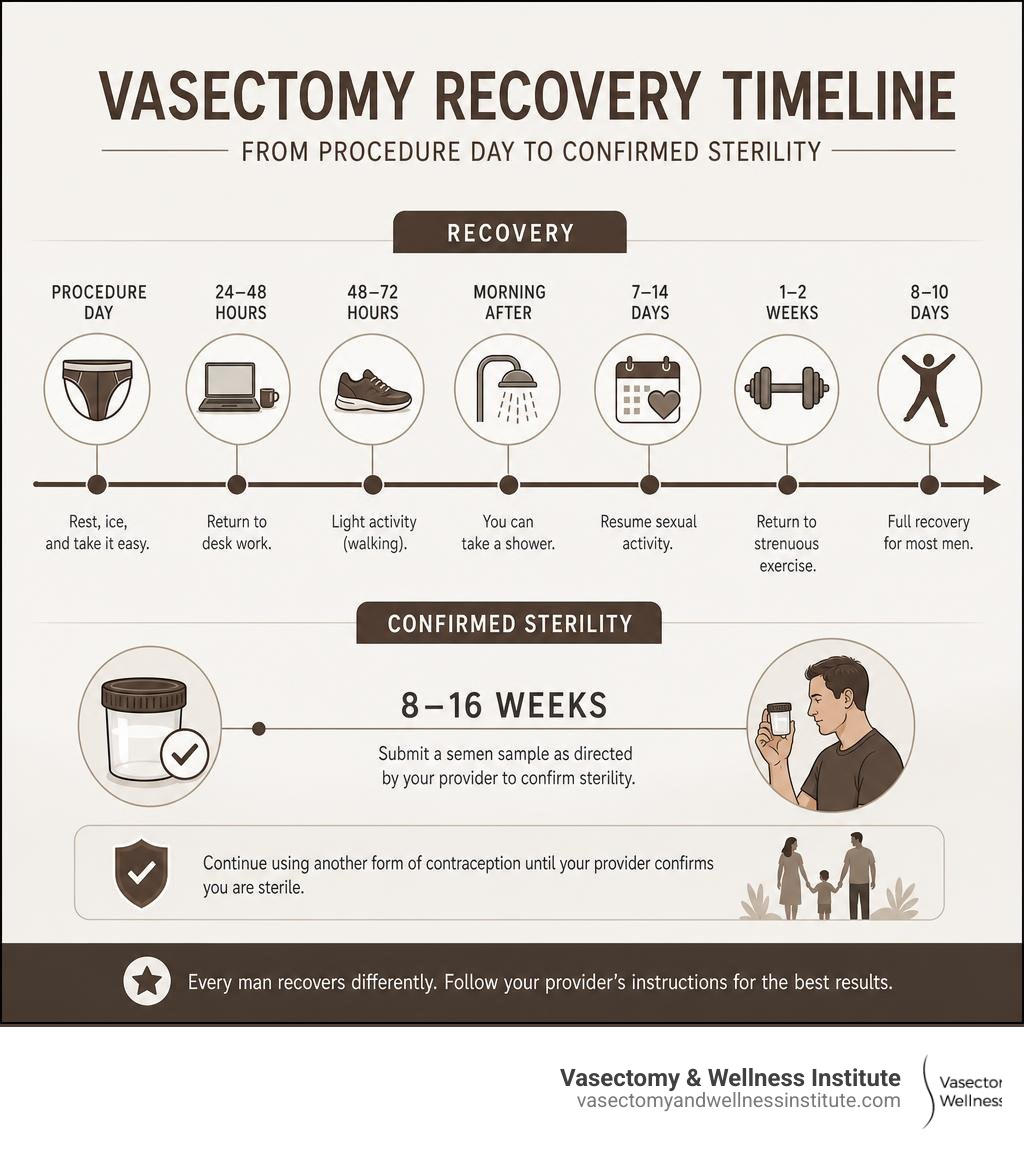
Here’s a fast-reference timeline for most patients:
| Milestone | Typical Timeframe |
|---|---|
| Return to desk work | 24–48 hours |
| Light activity (walking) | 48–72 hours |
| Shower | Morning after procedure |
| Sexual activity | 7–14 days |
| Strenuous exercise | 1–2 weeks |
| Full recovery | 8–10 days |
| Confirmed sterility (semen analysis) | 8–16 weeks |
Most men are surprised by how quickly they bounce back. According to Cleveland Clinic, most people report a full recovery within 8 to 10 days, with many resuming everyday activities within 48 to 72 hours.
But recovery speed isn’t the same for everyone. It depends heavily on which technique was used and how experienced your provider is.
I’m Dr. Mustafa Ahmed MD, FACS, FAACS, a board-certified surgeon with experience in minimally invasive procedures — including quick recovery vasectomy techniques that prioritize minimal tissue disruption and faster healing. In this guide, I’ll walk you through everything you need to know to recover as comfortably and efficiently as possible.
Quick recovery vasectomy resources:
Understanding the Quick Recovery Vasectomy: No-Scalpel vs. Traditional Methods
When planning a quick recovery vasectomy, the surgical technique chosen by your physician makes all the difference. Traditional vasectomies have been performed for decades, but modern medical advancements have introduced the no-scalpel vasectomy (NSV), which has revolutionized the patient recovery experience.
To understand why a no-scalpel approach leads to a much faster bounce-back, it helps to compare the two methods directly:
| Recovery Metric | Traditional Scalpel Vasectomy | No-Scalpel Vasectomy (NSV) |
|---|---|---|
| Incision Method | One or two surgical cuts with a scalpel | Single tiny puncture with a specialized tool |
| Sutures / Stitches | Requires stitches to close the incisions | No stitches required; puncture heals naturally |
| Tissue Trauma | Higher tissue disruption and blood vessel damage | Minimal tissue trauma and dissection |
| Postoperative Pain | Moderate to high (3x higher pain rates) | Mild soreness; significantly lower discomfort |
| Infection & Hematoma Risk | Standard surgical risk profile | Significantly lower risk of bleeding or infection |
| Average Recovery Window | 10 to 14 days before normal routine | 5 to 7 days for most everyday activities |
A conventional vasectomy relies on a scalpel to make incisions in the scrotum to access the vas deferens (the tubes that carry sperm). Cutting through skin and underlying tissue inevitably causes more tissue trauma, leading to increased inflammation, swelling, and postoperative pain.
In contrast, a no-scalpel vasectomy uses a specialized, extremely sharp puncture instrument to make a single, tiny opening in the skin. The surgeon gently stretches the opening to access and isolate the vas deferens. Because the skin is stretched rather than cut, blood vessels and nerves are pushed aside rather than severed.
According to a comprehensive review in the Comparing vasectomy techniques, recovery and complications, conventional scalpel vasectomies carry a threefold higher rate of postoperative pain compared to the no-scalpel technique. Furthermore, because the puncture hole in an NSV is so small, it seals itself shut naturally within 24 hours, completely eliminating the need for stitches. If you want a low-stress experience with the absolute fastest return to your normal life, choosing a No-Needle, No-Scalpel Vasectomy: A Low-Stress Option is the clear path forward.
Why No-Needle Anesthesia Supports a Quick Recovery Vasectomy
The “fear of the needle” is one of the most common reasons men delay getting a vasectomy. Traditional local anesthesia requires injecting numbing medication directly into the scrotal skin and around the vas deferens using a standard needle. This can cause a sharp pinch, burning sensations, and immediate localized swelling before the procedure even begins.
To address this, we utilize no-needle anesthesia. This advanced technique uses a specialized high-pressure jet injector to deliver the local anesthetic.
- How it works: The injector uses compressed air to spray a microscopic stream of anesthetic directly through the skin without a needle puncture.
- Instant numbing: The medication penetrates the tissue instantly, numbing the nerves immediately and painlessly.
- Anxiety reduction: Eliminating the needle significantly lowers pre-procedure anxiety, keeping your blood pressure stable.
- Less bruising: Because there is no needle to accidentally nick a tiny capillary, local bruising and swelling at the injection site are virtually non-existent, setting the stage for a highly successful, rapid recovery.
Using these advanced, minimally invasive tools means you can skip the surgical drama. For a closer look at how this needle-free approach changes the entire experience, check out No Knife, No Problem: The Complete Guide to NSV.
The Post-Vasectomy Recovery Timeline: What to Expect
Understanding the phases of healing is essential for managing your recovery. While a quick recovery vasectomy minimizes downtime, your body still requires time to seal the vas deferens and repair the localized tissue.
The First 24 Hours: Complete Rest
The day of your procedure is all about taking a load off. When you arrive home, plan to lie flat on your back in bed or on a comfortable couch. Keeping your body horizontal minimizes gravity-induced swelling in the scrotum. Even if you feel absolutely fine due to the lingering local anesthetic, do not attempt to walk around, clean the house, or do light chores. Rest is your primary job.
24 to 72 Hours: Light Transition
By the second day, you can begin moving around the house cautiously. You can take a warm shower starting the morning after your procedure, but avoid scrubbing the scrotal area. Keep activities light; this is a great time to catch up on your favorite shows or read. Most men can comfortably return to a remote desk job or light office work within 24 to 48 hours, provided they can remain seated.
Days 3 to 7: Gradual Return
During this window, any minor swelling or bruising should begin to fade. You can gradually increase your walking distance and resume normal, non-strenuous daily routines. By day 7, most men feel close to 100% normal.
To ensure you are on the right track, you can read more in-depth timeline details in the Vasectomy: Procedure, Recovery & Effectiveness and consult A Comprehensive Guide to Vasectomy Recovery Times.
Resuming Work, Exercise, and Daily Activities
One of the most frequent questions we receive is, “When can I go back to my regular routine?” The answer depends heavily on what your routine actually looks like:
- Desk Work: If you work a sedentary office or remote job, you can typically return to work within 24 to 48 hours.
- Light Physical Labor: If your job requires standing, walking, or light lifting (under 15 pounds), plan to take 3 to 4 days off.
- Heavy Physical Labor: If your job involves heavy lifting, straining, or operating heavy machinery, you must wait at least 7 to 10 days before returning to full duty. Rushing back to physical labor can cause bleeding, severe swelling, or a hematoma.
- Strenuous Exercise: Do not jump straight back into your pre-vasectomy workout routine. Avoid running, cycling, weightlifting, and high-impact sports for at least 7 full days. When you do return to the gym, start with a “half-intensity” workout and wear supportive underwear. If you feel any pulling, aching, or discomfort in your groin, stop immediately.
For a complete guide on navigating your first showers and safely reintroducing movement, check out The First 48 Hours: Navigating Showers and Exercise After a Vasectomy.
Safe Timelines for a Quick Recovery Vasectomy and Sexual Activity
Resuming sexual activity too early is one of the most common causes of post-vasectomy complications. Even if your skin incision or puncture has completely healed, the internal structures—specifically the delicate ends of the severed vas deferens—are still in the early stages of knitting together.
We strongly advise waiting at least 7 days before engaging in any sexual activity, including masturbation and ejaculation.
Resuming ejaculation too soon can trigger a condition known as congestive epididymitis (painful swelling of the epididymis) or cause bleeding into the semen. When you do resume sexual activity, expect that the first few ejaculations might feel slightly different or cause a mild, dull ache in the testicles. This is completely normal and will pass.
Most importantly, you are not sterile immediately after a vasectomy. Viable sperm remain upstream in the vas deferens for weeks or even months. You must continue to use a reliable backup method of contraception for all sexual encounters until a post-vasectomy semen analysis (PVSA) officially confirms the absolute absence of motile sperm. To learn more about the science of internal healing, take a look at How Long It Really Takes to Heal After Getting Snipped.
Essential Post-Operative Care for Faster Healing
A speedy, comfortable recovery is highly dependent on how well you care for yourself in the days immediately following the procedure. Think of post-operative care as your active contribution to the surgical outcome. By using the right gear and following a few simple guidelines, you can dramatically cut down on swelling and discomfort.
- Scrotal Support: Leave the loose boxer shorts in your drawer. For at least the first 7 days, you must wear tight-fitting underwear, supportive briefs, or a athletic jockstrap. Keeping the scrotum elevated and secured against your body prevents gravity from pulling on the healing tissues and reduces the risk of swelling and aching.
- Ice Therapy: Cold therapy is your best friend during the first 48 hours. Apply a cloth-wrapped ice pack or a bag of frozen peas to your scrotum for 15 to 20 minutes at a time, once every hour. Never apply ice directly to the skin, and avoid keeping it on for more than 20 minutes to prevent tissue irritation.
- Pain Management: For mild discomfort or soreness, over-the-counter pain relievers are highly effective. We recommend using acetaminophen (Tylenol) as your primary option. Avoid blood-thinning medications like aspirin or high-dose NSAIDs (like ibuprofen) during the first 48 hours, as they can theoretically increase your risk of bleeding or bruising within the scrotum.
- Hygiene & Water Exposure: While you can safely shower the morning after your procedure, do not submerge your scrotum in water. This means no baths, hot tubs, swimming pools, or ocean swimming for at least 7 to 10 days. Submerging the healing puncture site in standing water introduces bacteria and significantly increases your risk of infection.
For a curated list of the best supportive gear and recovery hacks, read our guide on Essential Gear for a Cool and Comfortable Vasectomy Recovery.
Actionable Steps to Minimize Discomfort
To ensure you stay on the fast track to healing, here is a quick checklist of actionable steps you can take starting the moment you get home:
- Keep your feet up: For the first 2 to 3 days, try to rest with your feet elevated slightly above your heart level when lying down. This assists lymphatic drainage and keeps testicular bruising to an absolute minimum.
- Stay hydrated: Drink plenty of water to help your body flush out toxins and support cellular repair.
- Optimize your nutrition: Eat foods rich in Vitamin C (citrus fruits, bell peppers) and Zinc (lean meats, seeds, whole grains) to promote rapid collagen synthesis and wound healing.
- Don’t be a hero: If you feel an ache, it is your body’s way of telling you to slow down. Pushing through discomfort will only delay your recovery.
For more expert tips on how to rest like a pro, check out Don’t Be a Hero: Expert Advice for Faster Healing.
Minimizing Complications and Understanding Clinical Guidelines
While a quick recovery vasectomy is exceptionally safe, it remains a minor surgical procedure, meaning complications can occasionally occur. Understanding these risks—and how modern clinical guidelines seek to minimize them—will help you make informed decisions.
According to major international urological associations (including the American Urological Association, European Association of Urology, and Canadian Urological Association), certain surgical techniques are preferred to achieve the highest success rates with the lowest possible complication rates:
- Hematoma (1% to 2% risk): A hematoma is a collection of blood within the scrotum. It is typically caused by a tiny blood vessel leaking after the procedure. High-volume surgeons utilizing no-scalpel techniques significantly reduce this risk because they do not tear through tissue beds.
- Infection (0.2% to 1.5% risk): Post-vasectomy infections are rare, especially with no-scalpel procedures where the tiny puncture site seals quickly. Keeping the area clean and dry prevents bacterial entry.
- Sperm Granuloma: A sperm granuloma is a small, benign, pea-sized lump that forms when sperm leaks from the cut end of the vas deferens into the surrounding tissue. The body treats the sperm as a foreign substance and forms a small inflammatory boundary around it. These are generally harmless and resolve on their own.
- Post-Vasectomy Pain Syndrome (PVPS) (1% to 2% risk): PVPS is characterized by chronic scrotal pain lasting more than three months. Modern guidelines recommend techniques like “open-ended” vasectomies (leaving the testicular end of the vas unclipped or uncauterized) in some patients to prevent backpressure in the epididymis, which is believed to be a major contributor to chronic discomfort.
To optimize outcomes, guidelines recommend isolating the vas deferens using a no-scalpel approach, followed by mucosal cautery (using heat to seal the inner lining of the tube) combined with fascial interposition (sewing the surrounding tissue sheath over one end of the cut tube to create a physical barrier). This combination has been shown to reduce early recanalization (the tubes spontaneously growing back together) to near-zero.
For a deep dive into the clinical research surrounding these safety guidelines, read the Research on post-vasectomy recovery and complications and view our Detailed Guide to Vasectomy Recovery.
The Role of Surgeon Experience and Procedure Volume
When it comes to surgical outcomes, practice makes perfect. The experience level and procedure volume of your surgeon play a massive role in your recovery speed and overall safety.
- Lower Complication Rates: Surgeons who perform hundreds of vasectomies annually have refined their tactile feedback. They can isolate the vas deferens with minimal manipulation, resulting in less swelling and lower rates of hematoma or infection.
- Faster Procedure Times: An experienced surgeon can typically complete a no-needle, no-scalpel vasectomy in 15 to 20 minutes, reducing the time tissues are exposed and minimizing patient anxiety.
- Better Long-Term Success: High-volume urologists are highly proficient in advanced occlusion techniques (like mucosal cautery with fascial interposition), ensuring the lowest possible failure rates.
Choosing a dedicated specialist who focuses on men’s health procedures is one of the best investments you can make in your own recovery. Learn more about choosing the right provider in our Vasectomy Time to Heal: Complete Guide.
Frequently Asked Questions About Vasectomy Recovery
When is it safe to stop using backup birth control after a vasectomy?
You can only stop using backup birth control after you have completed a post-vasectomy semen analysis (PVSA) and received official clearance from your doctor. This test is typically scheduled 8 to 16 weeks (usually around 12 weeks) after your procedure, and after you have had at least 20 to 30 ejaculations.
The ejaculations are necessary to clear out any active sperm remaining in the upper portions of the vas deferens. If your semen analysis shows complete azoospermia (zero sperm) or a very low number of completely non-motile sperm, you are cleared to stop using other forms of contraception. Stopping backup birth control early is the number one cause of unexpected post-vasectomy pregnancies.
What warning signs indicate I should contact my doctor during recovery?
While mild bruising and soreness are normal, you should contact your healthcare provider immediately if you experience any of the following warning signs:
- Fever or chills: A temperature above 100.4°F (38°C) can indicate an developing infection.
- Excessive or rapid swelling: Scrotal swelling that rapidly increases in size (especially if it begins to resemble the size of a tennis ball or grapefruit) suggests an active bleed or hematoma.
- Severe, unmanageable pain: Pain that is not relieved by resting, ice, or over-the-counter pain medications.
- Active bleeding or discharge: Pus, redness that is spreading across the scrotum, or continuous bleeding from the puncture site.
How long does mild soreness and swelling typically last?
Mild soreness, a dull ache in the groin, and minor scrotal swelling or bruising typically last for 3 to 7 days after a no-scalpel vasectomy. Most men find that this discomfort is easily managed with supportive underwear, periodic icing, and occasional acetaminophen. Any residual tenderness should completely resolve within 2 weeks of the procedure.
Conclusion

A quick recovery vasectomy does not have to be a stressful or painful milestone. By opting for modern, minimally invasive techniques—such as the no-needle, no-scalpel approach—you can enjoy a streamlined procedure with minimal discomfort, a rapid return to your normal routine, and the ultimate peace of mind.
At the Vasectomy & Wellness Institute in Henderson, Nevada, we specialize in providing easy, painless, and highly efficient wellness services tailored specifically to men’s needs. Our team is dedicated to delivering expert care in a warm, comfortable, and professional environment.
If you are ready to take control of your reproductive health with a fast, virtually painless procedure, we invite you to take the next step. Schedule your consultation for a quick recovery vasectomy with us today.