

What to Expect When You Recover from a Vasectomy
Knowing how to recover from a vasectomy the right way makes the difference between a smooth, uneventful healing process and unnecessary discomfort or complications. The good news? For most men, recovery is faster and simpler than they expect.
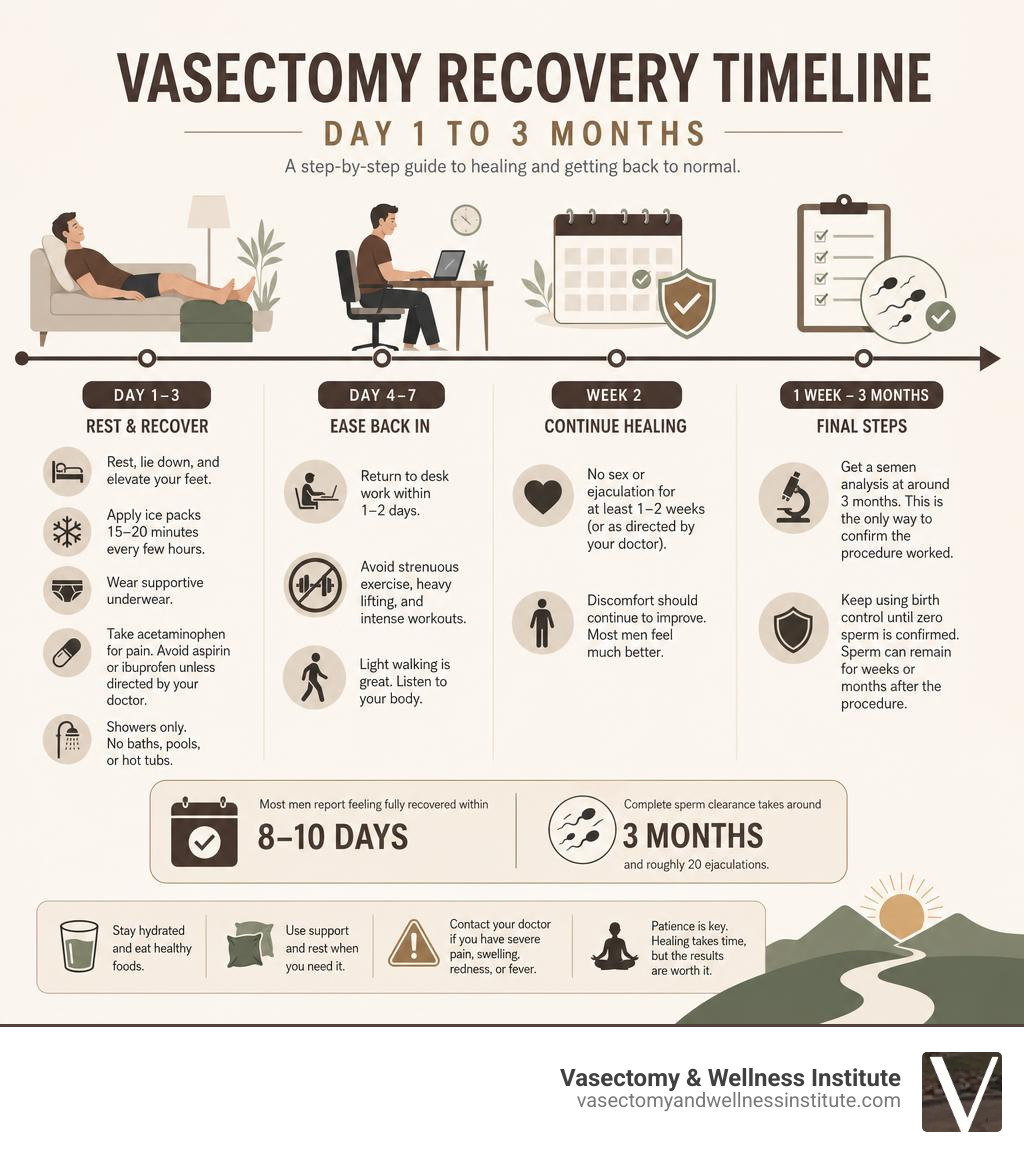
Here’s a quick overview of the key recovery steps:
- Rest for the first 24-72 hours – lie down, elevate your feet, and take it easy
- Apply ice packs – wrap in a cloth and apply for 15-20 minutes every few hours for the first 2-3 days
- Wear supportive underwear – snug briefs or a jockstrap for at least the first week
- Take acetaminophen for pain – avoid aspirin or ibuprofen unless directed by your doctor
- Skip baths, pools, and hot tubs – showers only for at least 5 days
- No sex or ejaculation for at least 1-2 weeks – follow your doctor’s specific guidance
- Return to desk work within 1-2 days – physical jobs may need 2-3 days off
- Avoid strenuous exercise for at least 1 week – heavy lifting and intense workouts should wait longer
- Get a semen analysis at around 3 months – this is the only way to confirm the procedure worked
- Keep using birth control until zero sperm is confirmed – sperm can remain for weeks or months after the procedure
Most men report feeling fully recovered within 8-10 days, though complete sperm clearance takes around 3 months and roughly 20 ejaculations.
Over 500,000 vasectomies are performed in the U.S. every year, making it one of the most common and reliable forms of permanent contraception. Yet many men head home after the procedure with more questions than answers about what happens next.
That’s exactly what this guide is here to solve. I’m Dr. Mustafa Ahmed MD, FACS, FAACS, a board-certified surgeon with experience in minimally invasive procedures and post-operative care — including helping patients understand how to recover from a vasectomy safely and confidently. My background in surgical critical care and general surgery means I approach recovery guidance with both clinical precision and practical, real-world perspective.
How to recover from a vasectomy terms to know:
Understanding the Procedure and Immediate Aftercare
To properly understand how to recover from a vasectomy, it helps to know exactly what happens during the procedure. A vasectomy is a highly effective, permanent method of male contraception. The goal of the surgery is to block the vas deferens—the two small tubes that carry sperm from the testicles to the urethra. By cutting, tying, or sealing these tubes, sperm can no longer mix with semen.
At the Vasectomy & Wellness Institute in Henderson, Nevada, we specialize in the advanced, minimally invasive no-needle, no-scalpel vasectomy technique. Unlike conventional vasectomies that require incisions and stitches, the no-scalpel method relies on a single tiny puncture to access the vas deferens. This approach is performed under local anesthesia, meaning you will only feel a mild tugging or pressure sensation during the quick 15-to-30-minute outpatient procedure.
Because the puncture is so small, it heals naturally without stitches, significantly reducing post-operative pain, bruising, and swelling compared to conventional surgery. You can read more about what to expect immediately after in this Detailed Guide to Vasectomy Recovery.
As soon as the procedure is finished, your body begins the healing process. Your primary goal during immediate aftercare is to protect the surgical site and prevent strain. You will need to wear scrotal support—such as a tight athletic supporter (jockstrap) or snug compression shorts—immediately after the procedure to hold the scrotum close to the body. This prevents the constant movement and gravity-induced tugging that can cause bleeding or increased swelling. For a deeper dive into the medical details of the surgery, you can explore the Cleveland Clinic Vasectomy Guide.
How to Recover from a Vasectomy: The First 72 Hours
The first three days (72 hours) after your vasectomy are the most critical for preventing complications and ensuring a speedy recovery. During this phase, you should treat rest as your full-time job.
To minimize swelling and bruising, follow these essential steps during the first 72 hours:
- Commit to complete rest: Lie down as much as possible for the first 24 to 48 hours. Keep your feet elevated above heart level when resting on a couch or bed, as this helps reduce fluid accumulation and minimizes bruising in the testicles.
- Apply cold therapy: Use ice packs or bags of frozen peas wrapped in a clean, thin cloth. Place them against your scrotum for 15 to 20 minutes every hour. Never apply ice directly to the bare skin, as this can cause tissue damage. Cold therapy is highly effective at constricting blood vessels, which limits internal bleeding and swelling.
- Wear supportive underwear: Keep your supportive jockstrap or snug briefs on at all times during the first 3 days, even while sleeping. Avoid loose boxers, which allow too much movement and can prolong your soreness.
- Choose the right pain relievers: Use acetaminophen (Tylenol) to manage post-operative soreness. Avoid nonsteroidal anti-inflammatory drugs (NSAIDs) like aspirin, ibuprofen (Advil, Motrin), or naproxen (Aleve) during the first 48 hours unless explicitly cleared by us, as these medications can thin your blood and increase the risk of bleeding or a scrotal hematoma.
- Keep the area dry: Avoid taking showers or baths for the first 2 to 3 days. When you do resume showering, use warm (not hot) water, wash the area very gently with mild soap, and pat the skin completely dry with a clean towel instead of rubbing. Avoid baths, swimming pools, saunas, and hot tubs for at least a week to protect the puncture site from infection.
For a comprehensive checklist of what you need before your procedure, check out this guide on Essential Gear for a Cool and Comfortable Vasectomy Recovery. You can also review general expectations on the Planned Parenthood Vasectomy Recovery page.
Timeline for Returning to Work, Exercise, and Sex
Every patient heals at a slightly different pace, but having a clear timeline helps you plan your return to normal activities without rushing your recovery.
| Activity Type | Safe Timeline | Recovery Guidelines & Milestones |
|---|---|---|
| Desk Work / Light Activity | 1 to 2 days | Return when soreness is manageable; avoid long periods of standing. |
| Physical Labor / Heavy Lifting | 3 to 7 days | Strenuous jobs require 2-3 days off; avoid lifting over 10 lbs for a week. |
| Light Exercise (Walking) | 3 to 5 days | Start with short, flat walks; stop immediately if you feel pressure or pain. |
| Intense Exercise / Sports | 7 to 14 days | Avoid jogging, cycling, weightlifting, and contact sports for at least 1-2 weeks. |
| Sexual Activity / Masturbation | 7 to 14 days | Wait at least one full week; always use backup birth control. |
| Semen Analysis | 12 weeks (3 months) | Crucial step to confirm zero sperm count before stopping backup birth control. |
To avoid setbacks, it is vital to listen to your body and follow expert advice. Do not try to push through discomfort. For detailed clinical advice on avoiding recovery setbacks, read Don’t Be a Hero: Expert Advice for Faster Healing.
Resuming Physical Activity and Exercise
When learning how to recover from a vasectomy, many active men are eager to get back to their fitness routines. However, returning to strenuous exercise too quickly is one of the most common causes of post-vasectomy complications, such as bleeding, severe swelling, or the formation of a painful mass called a hematoma.
During the first 3 to 5 days, limit your movement to light walking around the house to encourage healthy blood circulation. Avoid any exercise that places direct pressure on the groin or causes heavy bouncing. This means jogging, cycling, gym workouts, heavy weightlifting, and contact sports must be completely avoided for at least one to two weeks.
When you do return to the gym, start at about 50% of your normal intensity and gradually build back up. If you feel any aching, pulling, or pressure in your scrotum, stop immediately and rest. For a detailed breakdown of physical recovery milestones, consult our Vasectomy Time to Heal Complete Guide.
Safe Sexual Activity and How to Recover from a Vasectomy Safely
Resuming sexual activity too early can disrupt the healing vas deferens and cause pain or bleeding. We recommend waiting at least 7 to 14 days before engaging in any sexual activity, including intercourse, masturbation, or ejaculation.
Even after you feel fully healed and resume sex, you must understand that you are not immediately sterile. Sperm can remain viable in the upper portion of the vas deferens for weeks or even months after the procedure. It typically takes about 20 to 30 ejaculations, or roughly 3 months, to completely clear the remaining sperm from your reproductive tract.
You must continue using an alternative, highly reliable method of contraception (such as condoms or birth control pills) until a follow-up semen analysis officially confirms a zero sperm count. Skipping this step is the primary cause of unexpected pregnancies after a vasectomy. Learn more about the biology of this healing phase by reading How Long It Really Takes to Heal After Getting Snipped.
Pain Management and How to Recover from a Vasectomy Comfortably
Mild to moderate soreness, bruising, and minor swelling of the scrotum are completely normal parts of the healing process and typically resolve within 1 to 2 weeks. However, being aware of potential benign conditions can ease your mind during recovery:
- Sperm Granuloma: This is a harmless, hard, pea-sized lump that can form if sperm leaks from the cut end of the vas deferens. It is not dangerous, and your body will naturally reabsorb it over time.
- Scrotal Congestion: Some men experience a dull ache or sensation of fullness in the testicles a few weeks after the procedure. This is caused by the temporary backup of sperm that the body is learning to reabsorb, and it generally resolves on its own.
- Post-Vasectomy Pain Syndrome (PVPS): Occurring in only 1% to 2% of patients, this is a rare condition characterized by chronic testicular pain that persists for months. If you experience persistent, long-term discomfort, further medical evaluation is available to help resolve it.
For a comprehensive look at managing discomfort and understanding these symptoms, refer to A Comprehensive Guide to Vasectomy Recovery Times.
Frequently Asked Questions about Vasectomy Recovery
How long does it take to fully heal after a vasectomy?
Most men feel back to their normal self within 8 to 10 days after the procedure. However, complete internal tissue healing can take several weeks. While you can resume your standard daily routine, light work, and basic activities within a few days, your body is still actively remodeling the microscopic tissues where the vas deferens was sealed. Always follow the personalized post-operative care and recovery guidelines provided by your clinical team. For official clinical recovery timelines, you can review the Alberta Health Services Vasectomy Aftercare resource.
Can a vasectomy be reversed if I change my mind?
Yes, a vasectomy can often be reversed through a microsurgical procedure called a vasectomy reversal (vasovasostomy or vasoepididymostomy). During this surgery, a specialist uses an operating microscope to carefully reconnect the severed ends of the vas deferens, allowing sperm to enter the semen once again.
While reversals are highly technical and require specialized surgical expertise, success rates for restoring sperm to the ejaculate range from 60% to 95%. However, success rates and subsequent pregnancy rates decline as more time passes after the original vasectomy, particularly after 15 years. For detailed information on the reversal procedure, risks, and fertility outcomes, visit the Mayo Clinic Vasectomy Reversal page.
How long do I need to use backup birth control?
You must use a backup form of birth control until your doctor officially clears you. This clearance only happens after you submit a semen sample for analysis—typically around 12 weeks (3 months) after your procedure—and the laboratory confirms a zero sperm count. Relying on the vasectomy for pregnancy prevention before this clearance carries a high risk of pregnancy.
Conclusion

Recovering from a vasectomy is a straightforward process when you prioritize rest, protect the area, and give your body the time it needs to heal. By taking it easy for the first 72 hours, wearing supportive underwear, and waiting for your official semen analysis clearance, you can ensure a safe and successful recovery.
At the Vasectomy & Wellness Institute in Henderson, Nevada, we are dedicated to providing the highest standard of care. Our advanced, minimally invasive no-needle, no-scalpel vasectomy technique is designed to minimize discomfort and get you back to your active lifestyle as quickly and safely as possible.
Ready to take control of your family planning with an easy, virtually painless procedure? Schedule your consultation for our expert services today, and let our experienced team guide you every step of the way.