

What to Expect During the Recovery Period for Vasectomy
The recovery period for vasectomy is shorter than most men expect — and far less dramatic than the anxiety leading up to it.
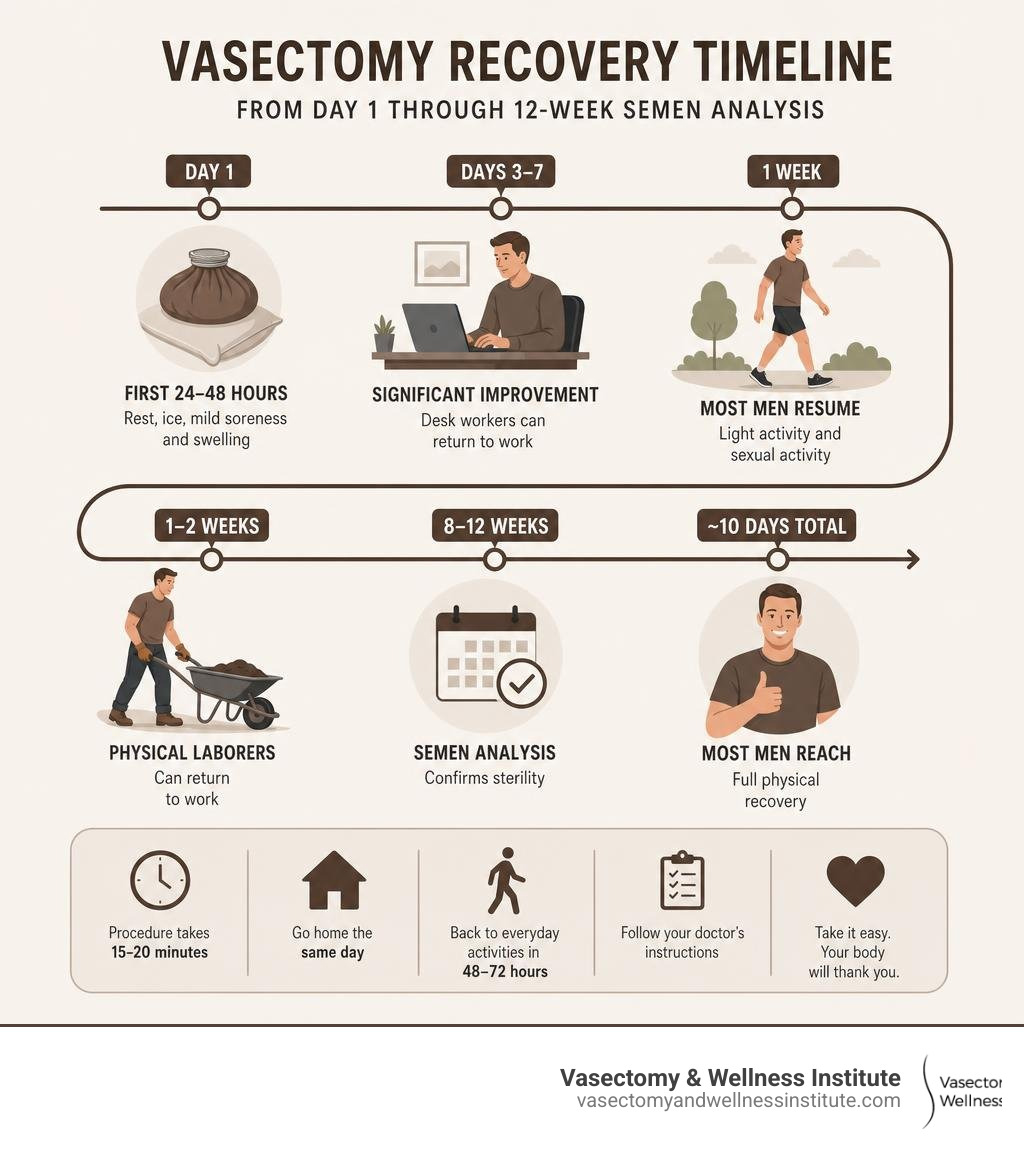
Here’s a quick overview of the typical recovery timeline:
| Timeframe | What to Expect |
|---|---|
| First 24-48 hours | Rest, ice, mild soreness and swelling |
| Days 3-7 | Significant improvement; desk workers can return to work |
| 1 week | Most men resume light activity and sexual activity |
| 1-2 weeks | Physical laborers can return to work |
| 8-12 weeks | Semen analysis confirms sterility |
| ~10 days total | Most men reach full physical recovery |
The procedure itself takes only 15 to 20 minutes as an outpatient surgery. You go home the same day. Most men are back to everyday activities within 48 to 72 hours.
The bigger challenge isn’t the pain — it’s the patience.
There are a few key rules to follow, a couple of things to watch out for, and one follow-up test that most men forget about. This guide covers all of it, plainly and completely.
I’m Dr. Mustafa Ahmed MD, FACS, FAACS, a board-certified surgeon with experience in minimally invasive procedures and post-operative recovery management — including guiding patients through every stage of the recovery period for vasectomy. Whether you’re planning ahead or already on the couch with an ice pack, this guide will walk you through exactly what to expect.
Handy recovery period for vasectomy terms:
- how long does it take for vasectomy to heal
- how long off work after vasectomy
- how to recover from a vasectomy
Understanding the Recovery Period for Vasectomy
A vasectomy is a highly effective, permanent method of birth control that works by preventing sperm from entering your semen. During the procedure, the vas deferens—the two small tubes that carry sperm from your testicles to your urethra—are cut, tied, or sealed.
Because it is performed as a minor outpatient surgery, you will be able to head home immediately afterward. While the procedure itself is incredibly quick, the healing process requires your body to mend the delicate tissues of the scrotum. This is where proper scrotal support and structured rest play a vital role. According to the Vasectomy: MedlinePlus Medical Encyclopedia, giving your body a few days of dedicated downtime is the most effective way to prevent swelling and ensure a smooth recovery.
Day-by-Day Timeline of the Recovery Period for Vasectomy
Understanding what happens day-by-day can help take the mystery out of your recovery. While everyone heals at their own pace, most men follow a very predictable healing path.
- The First 48 Hours: This is your official “couch time.” Your primary job is to rest, apply ice, and keep movement to an absolute minimum. You will likely experience a dull ache, mild swelling, and some minor bruising. This is completely normal as the local anesthetic wears off and your body begins the inflammatory stage of healing.
- Days 3 to 7: You will notice a turning point during this window. The sharpest discomfort transitions into a mild tenderness. If you work a desk job, you can typically return to your duties. However, you should still avoid heavy lifting, running, or any vigorous physical exertion.
- Day 8 and Beyond: Most men make a full physical recovery within 8 to 10 days. By this point, you can gradually resume your normal exercise routines and physical activities, provided you are no longer experiencing pain.
To help you plan, we have put together a guide comparing milestones based on your daily routine:
| Recovery Milestone | Desk Jobs / Light Activity | Physical Labor / Heavy Workouts |
|---|---|---|
| Return to Work | 24 to 48 hours | 7 to 10 days |
| Walking / Light Chores | 48 hours | 48 hours |
| Lifting Restrictions | Avoid >10 lbs for 1 week | Avoid >10 lbs for 1 to 2 weeks |
| Resuming Sexual Activity | 7 days (if comfortable) | 7 to 14 days |
| High-Impact Exercise | 1 to 2 weeks | 2 weeks+ (with support) |
For a deeper dive into these milestones, check out our A Comprehensive Guide to Vasectomy Recovery Times.
How No-Scalpel Techniques Shorten the Recovery Period for Vasectomy
At the Vasectomy & Wellness Institute, we specialize in the no-needle, no-scalpel vasectomy technique. Unlike traditional methods that require one or two incisions made with a scalpel, the no-scalpel technique utilizes a highly specialized instrument to make a single, tiny puncture in the scrotal skin.
This puncture is so small that it does not require any stitches to close; it simply heals on its own within a few days. Because this method causes significantly less disruption to the surrounding blood vessels and tissues, patients experience:
- Minimal bleeding and a lower risk of hematoma (blood pooling).
- Significantly less post-operative bruising and swelling.
- A reduced risk of infection.
- A faster overall healing process.
By choosing a puncture-based approach, you can significantly shorten your downtime. Learn more about how we accelerate your healing in our Fast Track to Healing: Your Quick Recovery Vasectomy Guide.
The Golden Rules of Post-Operative Care and Pain Management
The secret to an easy recovery lies in how well you care for yourself during the first few days. We tell our patients that “doing nothing” is an active, vital part of their medical treatment plan during the first 48 hours.
To keep your recovery comfortable, follow these three golden rules:
- Keep the Scrotum Elevated: Whenever you are resting, try to keep your feet slightly elevated. This helps reduce gravity-induced swelling in the pelvic region.
- Wear Supportive Underwear: Leave the loose boxers in your drawer. You need tight-fitting briefs, compression shorts, or an athletic jockstrap to hold the scrotum snugly against your body. This minimizes movement and friction.
- Use Acetaminophen for Pain: Over-the-counter acetaminophen (Tylenol) is highly effective for managing post-operative soreness. We generally advise avoiding aspirin or ibuprofen immediately before and after the procedure, as these can thin your blood and increase the risk of bleeding, unless otherwise directed by your healthcare team.
To make sure you have everything you need before your appointment, review our list of Essential Gear for a Cool and Comfortable Vasectomy Recovery.
Managing Swelling and Discomfort
Swelling is your body’s natural response to tissue manipulation, but you can keep it to a minimum with consistent icing.
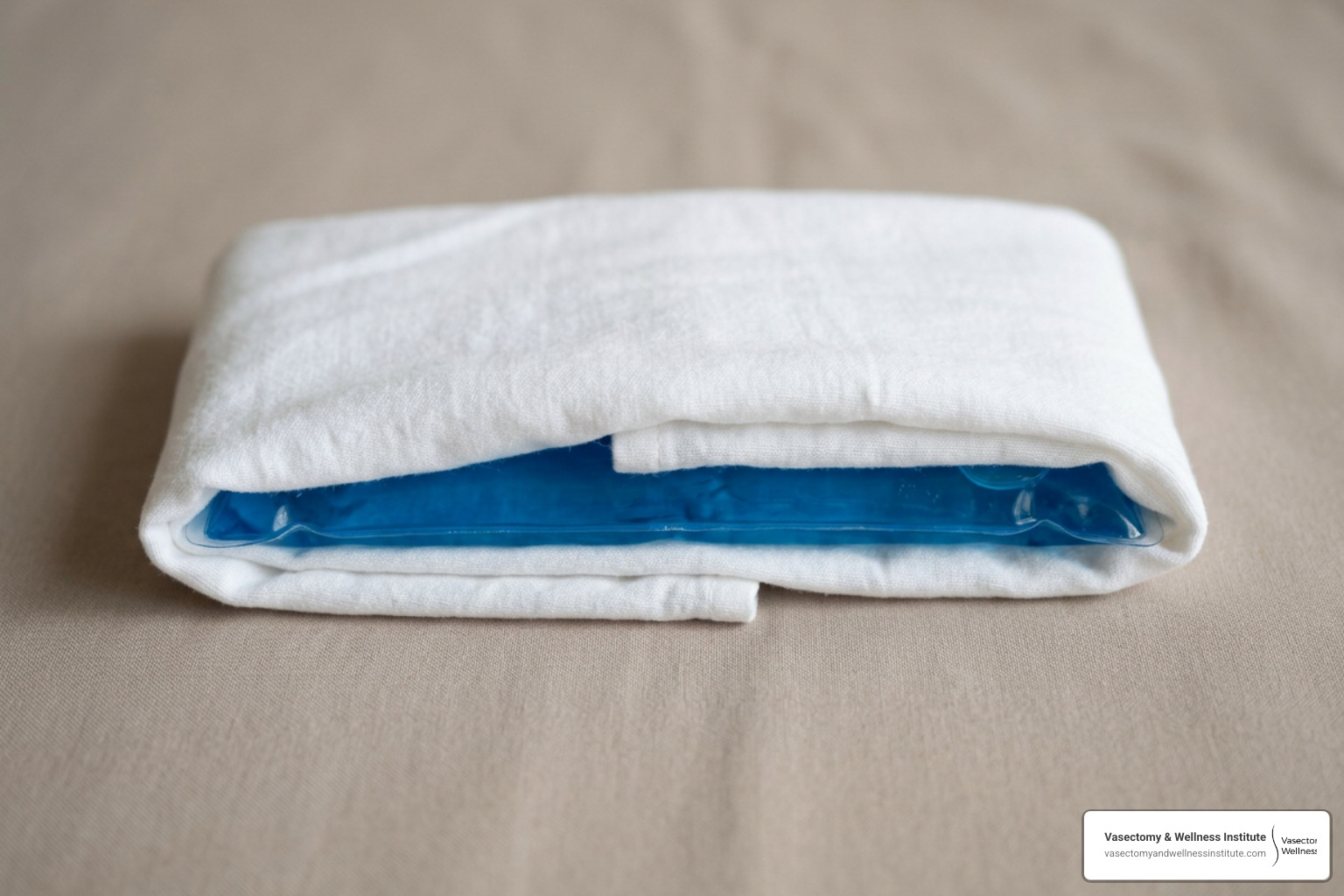
Apply cold gel packs or bags of frozen peas wrapped in a clean, dry cloth to your scrotum. Use a strict schedule of 20 minutes on, 20 minutes off for the first 24 to 48 hours. Never apply ice directly to the skin, as this can cause tissue damage.
Additionally, keeping your supportive briefs on—even while sleeping—prevents your testicles from shifting, which drastically reduces the dull throbbing sensation that many men experience when moving around. Trying to power through the discomfort without resting will only prolong your recovery. Read our expert advice on why you shouldn’t try to “tough it out” in Dont Be a Hero: Expert Advice for Faster Healing.
Hygiene and Wound Care
Keeping the surgical area clean and dry is essential for preventing infection.
- Showering: You can typically take a gentle shower 24 to 48 hours after your procedure. Let warm, soapy water run over your groin area, but do not scrub, rub, or apply direct water pressure to the puncture site. Gently pat the area dry with a clean towel.
- Baths and Swimming: Avoid submerging your pelvic area in water. This means no baths, hot tubs, swimming pools, or natural bodies of water for at least 5 to 7 days, or until the puncture site has completely closed.
For step-by-step instructions on navigating your first shower, check out The First 48 Hours: Navigating Showers and Exercise After a Vasectomy.
Resuming Physical Activity, Work, and Sex Safely
Getting back to your normal routine is a gradual process. Pushing your body too hard, too soon, can cause the healing vas deferens to pull apart or bleed, which will set your recovery back significantly.
According to guidelines from Planned Parenthood on What to Expect After a Vasectomy \| Sex After Vasectomy, you must listen to your body and strictly adhere to physical restrictions, especially when it comes to heavy lifting (over 10 pounds), running, cycling, and sexual activity.
Returning to Work and Daily Chores
How soon you return to work depends entirely on what you do for a living.
If you have a desk job or can work from home, you can often resume working within 24 to 48 hours. However, if your job involves standing for long periods, walking constantly, or performing light manual labor, we recommend taking 3 to 4 days off.
For those in heavy physical labor industries—such as construction, warehousing, or agriculture—you should expect to take up to a week off or request light duty. For a comprehensive look at planning your time off, see How Much Time Off Do You Really Need After a Vasectomy?.
When Can You Have Sex and Ejaculate?
We recommend waiting at least one full week before resuming any sexual activity, including masturbation.
Ejaculation involves muscular contractions of the pelvis and the vas deferens. If you ejaculate too early, you risk causing pain, bleeding, or a condition called epididymitis (inflammation of the tube at the back of the testicle). When you do feel ready to resume, take things slow and gentle. If you experience any pinching or aching during or after arousal, stop and give your body a few more days to heal. For more details on what to expect during your first post-procedure ejaculation, read How Long It Really Takes to Heal After Getting Snipped.
Semen Analysis and Confirming Your Sterility
One of the most important things to remember is that you are not sterile immediately after a vasectomy.
Sperm that were already produced before your surgery remain viable in the upper portion of the vas deferens. It takes time and regular ejaculations to completely flush these remaining sperm out of your system.

According to the Vasectomy: AUA Guideline (2026), you must continue to use an alternative, reliable method of contraception (such as condoms or oral birth control) until a laboratory analysis confirms that your semen is entirely free of viable sperm.
The Timeline for Semen Testing
We typically schedule your follow-up semen analysis 8 to 12 weeks after your procedure. To ensure an accurate sample:
- You must ejaculate at least 20 to 30 times before your test to clear out the remaining sperm.
- You will provide a semen sample to a designated laboratory.
- The lab will look for “azoospermia” (the complete absence of sperm) or a microscopic count of fewer than 100,000 non-motile sperm per milliliter.
Once we review your lab results and give you the official “all-clear,” you can safely discontinue other forms of birth control. To understand the testing process in detail, read our Vasectomy Time to Heal: Complete Guide.
When to Contact Your Doctor: Warning Signs of Complications
While complications after a modern, no-scalpel vasectomy are rare, it is important to know what signs require medical attention. According to clinical data in the Vasectomy – StatPearls – NCBI Bookshelf, about 1% to 2% of patients may experience issues like a hematoma (a collection of blood in the scrotum) or a localized infection.
Identifying Normal Healing vs. Complications
It is completely normal to experience mild bruising, a low-grade swelling, and a dull, manageable ache that responds well to over-the-counter pain relievers.
However, you should contact our office immediately if you experience any of the following warning signs:
- A fever over 100.4°F (38°C) or chills.
- Rapidly increasing swelling in your scrotum (which could indicate a hematoma).
- Severe, throbbing pain that is not relieved by acetaminophen.
- Active bleeding, pus, or foul-smelling discharge from the puncture site.
- Redness that is spreading rapidly across the skin of your scrotum.
For a comprehensive checklist of what is normal versus what is not, consult The Ultimate Survival Guide for Your Vasectomy Recovery.
Frequently Asked Questions About Vasectomy Healing
Can a vasectomy fail years after the procedure?
While a vasectomy is highly effective (over 99.9% success rate), there is an incredibly rare phenomenon known as spontaneous recanalization. This occurs when the cut ends of the vas deferens grow back together and create a new channel for sperm to pass through. The risk of a late failure after a confirmed clear semen analysis is approximately 1 in 2,000.
Does a vasectomy affect testosterone or sexual performance?
No. A vasectomy only blocks the pathway of sperm. Your testicles will continue to produce testosterone and sperm exactly as they did before (the body simply absorbs the unused sperm naturally). The procedure has absolutely no impact on your erectile function, sex drive, sensations, or the volume, appearance, and taste of your semen—since sperm makes up less than 10% of your total ejaculate.
What are the long-term options if I change my mind?
We always advise our patients to view a vasectomy as a permanent, irreversible decision. However, if your life circumstances change, a surgical procedure called a vasectomy reversal can sometimes reconnect the vas deferens. Alternatively, sperm can be retrieved directly from the testicles for use in in-vitro fertilization (IVF). Reversal success rates vary widely depending on how many years have passed since your original procedure, so it is best to be completely certain before moving forward.
Conclusion
At the Vasectomy & Wellness Institute in Henderson, Nevada, we are dedicated to providing a seamless, stress-free experience. Our modern, no-needle, no-scalpel techniques are designed to minimize discomfort and get you back to your favorite activities as quickly and safely as possible.
If you are ready to take control of your reproductive health with a highly reliable, permanent, and affordable birth control option, we are here to help. Schedule a consultation for expert care with our team today, and let us guide you toward a smooth and worry-free recovery.